AgentsView
MIT-licensed local-first desktop, web, and CLI workspace for searching coding-agent sessions and analyzing activity, tokens, and costs across tools.
Do not bounce yet
Read the fit check, compare one alternative, then decide whether the vendor page is still your best next click.
Quick Verdict
Fast fit check before you leave the page
Make the fit call first. Vendor pages are good at selling, but they rarely tell you where the product is a bad match.
- Developers who regularly switch between Claude Code, Codex, Cursor, OpenCode, Copilot, Gemini, or other coding agents
- Engineering leads comparing coding-agent activity, model usage, tokens, and estimated costs across projects
- Local-first tool users who want searchable session history without a mandatory hosted account
- Parsing many evolving session formats creates an ongoing accuracy and compatibility burden; unsupported fields or client changes can produce incomplete histories.
- Indexed sessions may contain prompts, source excerpts, file paths, tool output, and secrets, so local databases, exports, remote access, and sync destinations require careful protection.
- Anonymous daemon telemetry sends a stable installation ID at startup and every 24 hours by default; privacy-sensitive users need to disable it with `AGENTSVIEW_TELEMETRY_ENABLED=0` and verify network behavior.
Compare Next
Take one more internal step before the vendor pitch
This is where visitors usually jump out too early. Read one deeper take or open one alternative so the next click is informed instead of impulsive.
Alternative profile
Claude Code
Anthropic’s agentic coding platform for terminal, IDE, desktop, web, CI, and code-review workflows.
Alternative profile
Lore
Local memory and context-management gateway that gives Claude Code, Codex, OpenCode, Pi, and similar coding agents durable shared recall.
Alternative profile
Pi
Minimal terminal coding harness with extensions, skills, tree-structured sessions, and serious multi-provider model support.
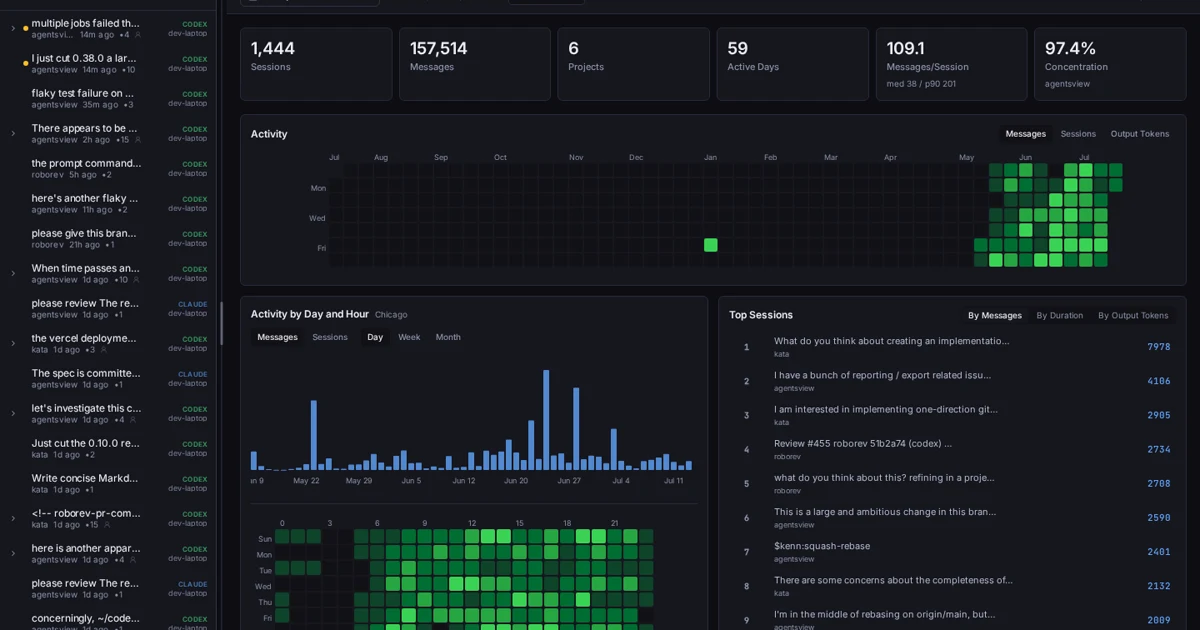
AgentsView is built for developers whose coding history is split across Claude Code, Codex, Cursor, Copilot, OpenCode, Gemini, and other agents. It discovers their local session files, indexes them into SQLite, and provides desktop, browser, and command-line views for searching conversations, inspecting activity, and understanding token and cost patterns. The useful distinction is local-first observability across many agents rather than another agent that writes code.
AgentsView indexes session files from Claude Code, Codex, Cursor, Copilot, OpenCode-format tools, Gemini, Qwen Code, Aider, Goose, and many other coding agents into a local SQLite-backed workspace. Its desktop app, local web UI, CLI, API, MCP server, semantic search, activity views, and usage reports help developers recover prior decisions, compare projects and models, inspect tool calls, and understand token and cost patterns without manually opening each agent's history. Optional PostgreSQL and filesystem synchronization can support shared or multi-machine reporting, while the default workflow remains local-first.
Why Choose AgentsView?
Choose AgentsView when previous coding-agent decisions are hard to recover because each client stores sessions in a different format and location.
Its desktop, local web, CLI, API, and MCP surfaces make the same session index useful for human browsing, automated reports, and retrieval from current agent workflows.
The activity and usage views can compare projects, agents, models, tokens, concurrency, and estimated costs across a history that provider-native dashboards rarely unify.
Treat the index as sensitive developer data. Review which directories are scanned, protect the local database and exports, disable the default anonymous daemon telemetry when policy requires it, and enable remote access or synchronization only with deliberate authentication, network, retention, and backup controls.
Key Features
Local-first SQLite index that discovers and parses session histories from dozens of coding agents instead of requiring each client to expose a common cloud API.
Desktop app, local web interface, and CLI for browsing sessions, projects, messages, tool calls, recent edits, activity, and model usage on macOS, Windows, and Linux.
Full-text, semantic, and hybrid session search, plus experimental Recall extraction for turning historical work into inspectable facts and decisions.
Token and estimated-cost reports by session, model, project, agent, machine, and time range, with JSON-friendly CLI output for automation.
MCP server, HTTP session API, JSONL and Markdown exports, and optional filesystem, artifact-folder, PostgreSQL, or DuckDB workflows for integration and reporting.
Active open-source release cadence, auto-updating desktop builds, and explicit parser documentation make coverage and implementation details inspectable.
Pros & Cons
- It creates one searchable history across otherwise siloed coding-agent clients, which is useful when teams switch tools or need to recover prior decisions.
- The default local-first design keeps ordinary browsing and analytics on the developer's machine instead of requiring a hosted account.
- Desktop, browser, CLI, API, and MCP surfaces support both interactive investigation and scripted reporting.
- Activity and usage views expose concurrency, model mix, tokens, and estimated costs that individual agent clients often hide or report inconsistently.
- Parsing many evolving session formats creates an ongoing accuracy and compatibility burden; unsupported fields or client changes can produce incomplete histories.
- Indexed sessions may contain prompts, source excerpts, file paths, tool output, and secrets, so local databases, exports, remote access, and sync destinations require careful protection.
- Anonymous daemon telemetry sends a stable installation ID at startup and every 24 hours by default; privacy-sensitive users need to disable it with `AGENTSVIEW_TELEMETRY_ENABLED=0` and verify network behavior.
- Cost figures depend on available token records and pricing metadata and should not be treated as provider invoices.
- Independent production evidence remains limited relative to the repository's fast GitHub growth and release pace.
Detailed Use Cases for AgentsView
Search full session histories when a design decision, debugging clue, command, or implementation detail is buried in a different agent client.
Break down sessions, concurrency, models, tokens, and estimated costs by project, agent, machine, and time range from one local index.
Connect current workflows to explicit session search and export surfaces instead of pasting entire archives into a prompt.
Use exports, filesystem sync, PostgreSQL, or DuckDB workflows for multi-machine or team analysis after applying appropriate privacy and access controls.
Who Should Use AgentsView?
Developers who regularly switch between Claude Code, Codex, Cursor, OpenCode, Copilot, Gemini, or other coding agents
Engineering leads comparing coding-agent activity, model usage, tokens, and estimated costs across projects
Local-first tool users who want searchable session history without a mandatory hosted account
Agent workflow builders evaluating MCP retrieval, session APIs, exports, or shared reporting pipelines
Perfect For
Search Claude Code, Codex, Cursor, OpenCode, Copilot, Gemini, and other agent histories from one local interface when a decision or implementation detail is buried in an older session.
Compare coding-agent activity, models, tokens, and estimated costs across projects or machines without manually merging each client's logs.
Expose historical sessions through MCP or HTTP APIs so a current coding workflow can retrieve prior context with explicit queries.
Export or synchronize selected session data for team reporting while keeping the default personal workflow local.
Technical Details
Direct Competitors
ccusage
Agentlore
Claude Code session viewers
provider-native usage dashboards
custom log-indexing pipelines
Similar Tools You Might Like
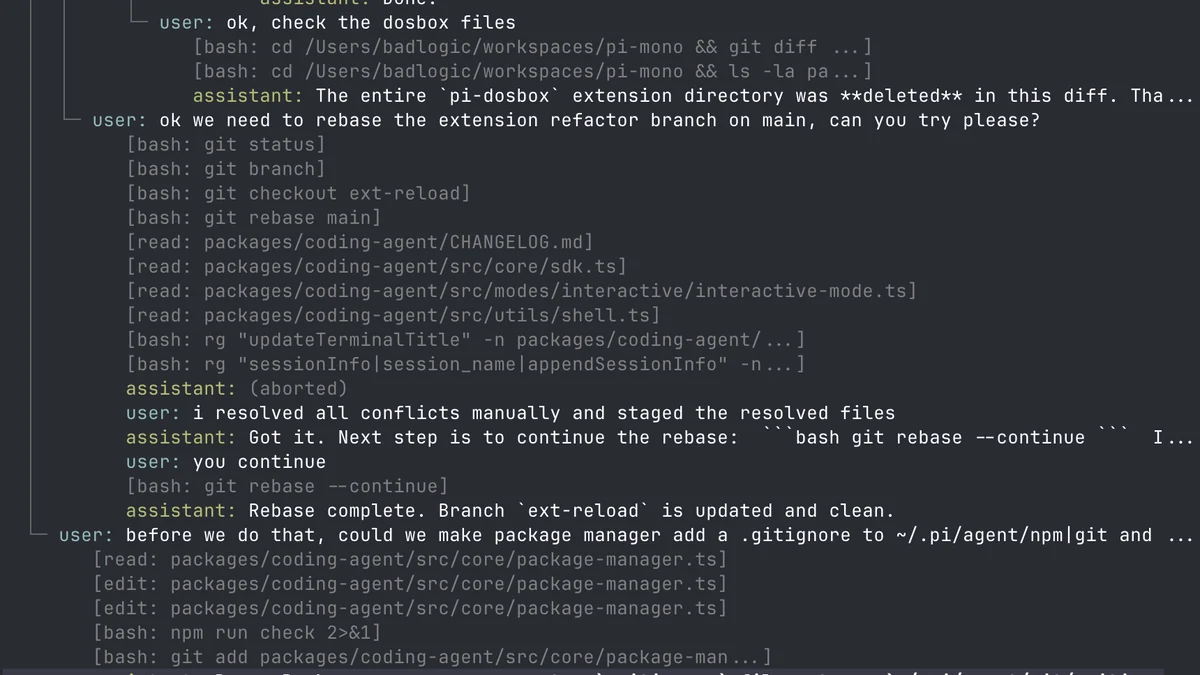
MIT-licensed RLM coding and research agent with a persistent IPython control plane, recursive subagents, durable sessions, schedules, goals, and bounded autonomous runs.
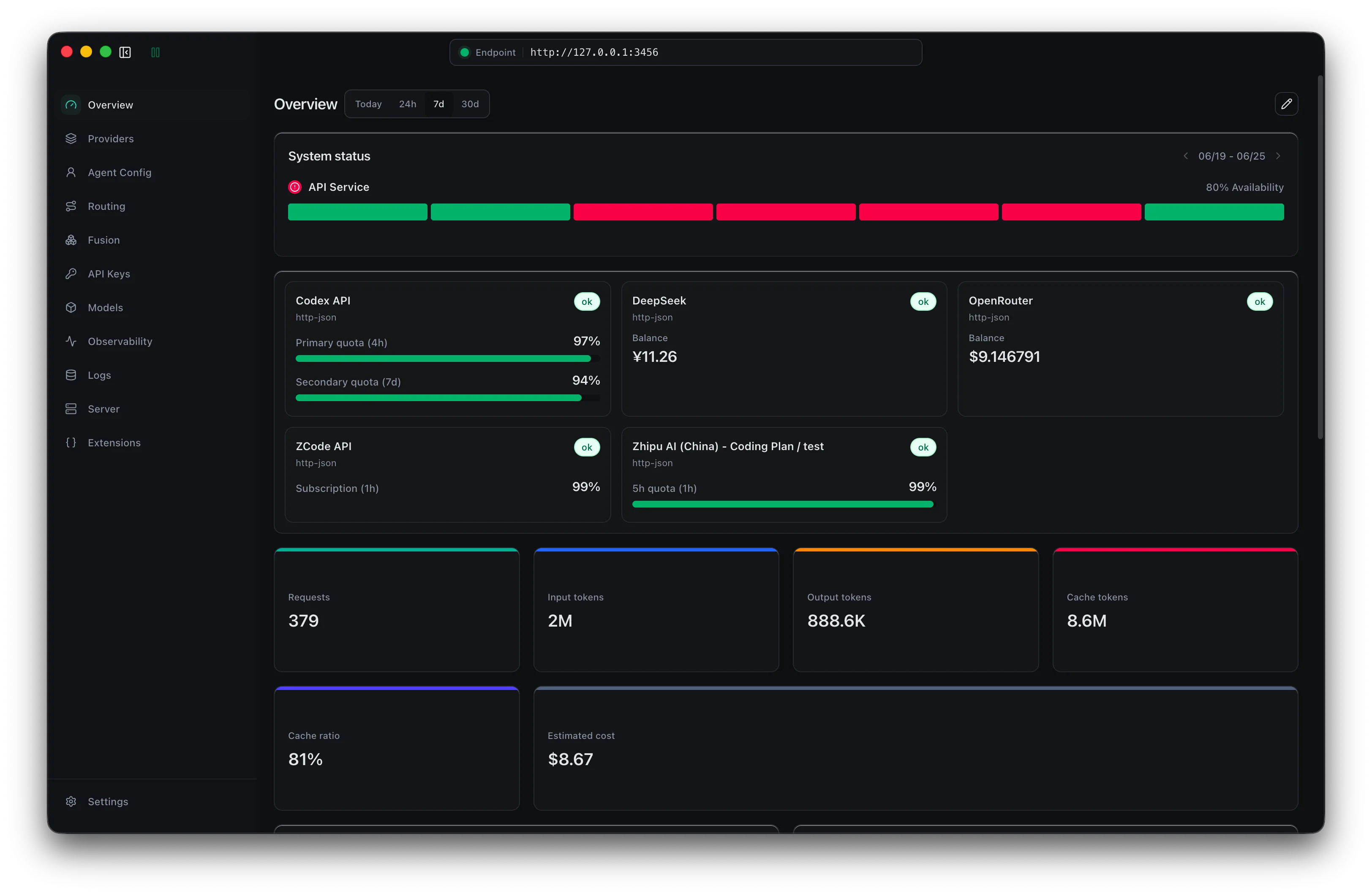
MIT-licensed local gateway and desktop control plane for routing Claude Code, Codex, Grok CLI, and compatible agents across model providers.
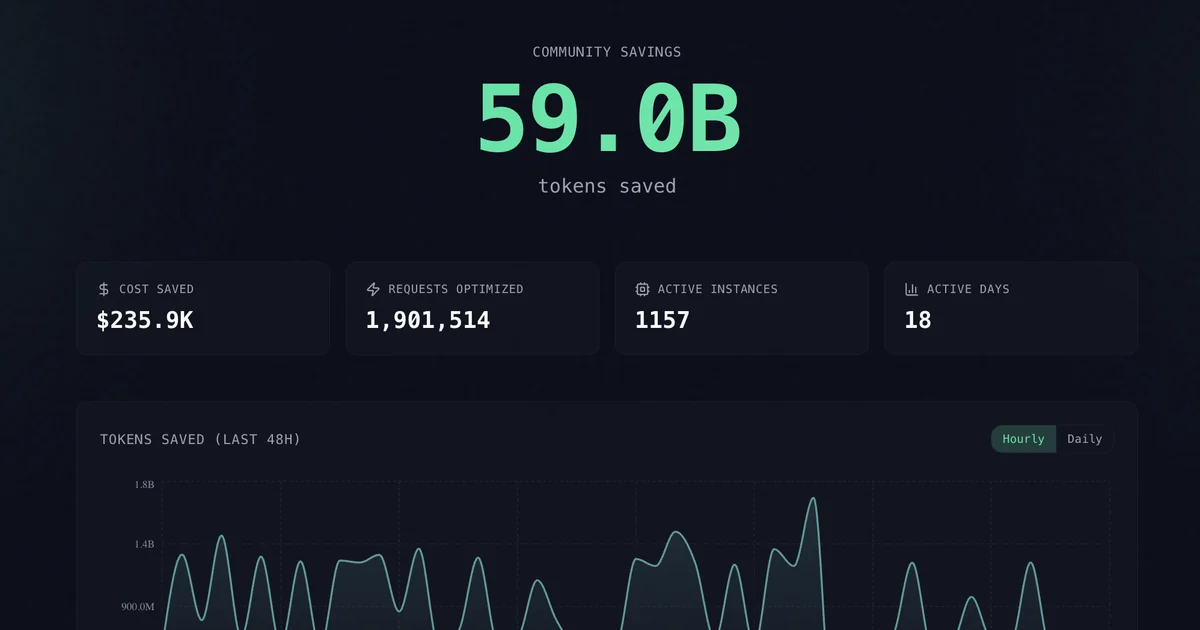
Apache-2.0 context-compression layer that wraps Claude Code, Codex, Cursor, OpenCode, and MCP clients so agents send fewer tool-output and history tokens.
Alternative Tools to Consider
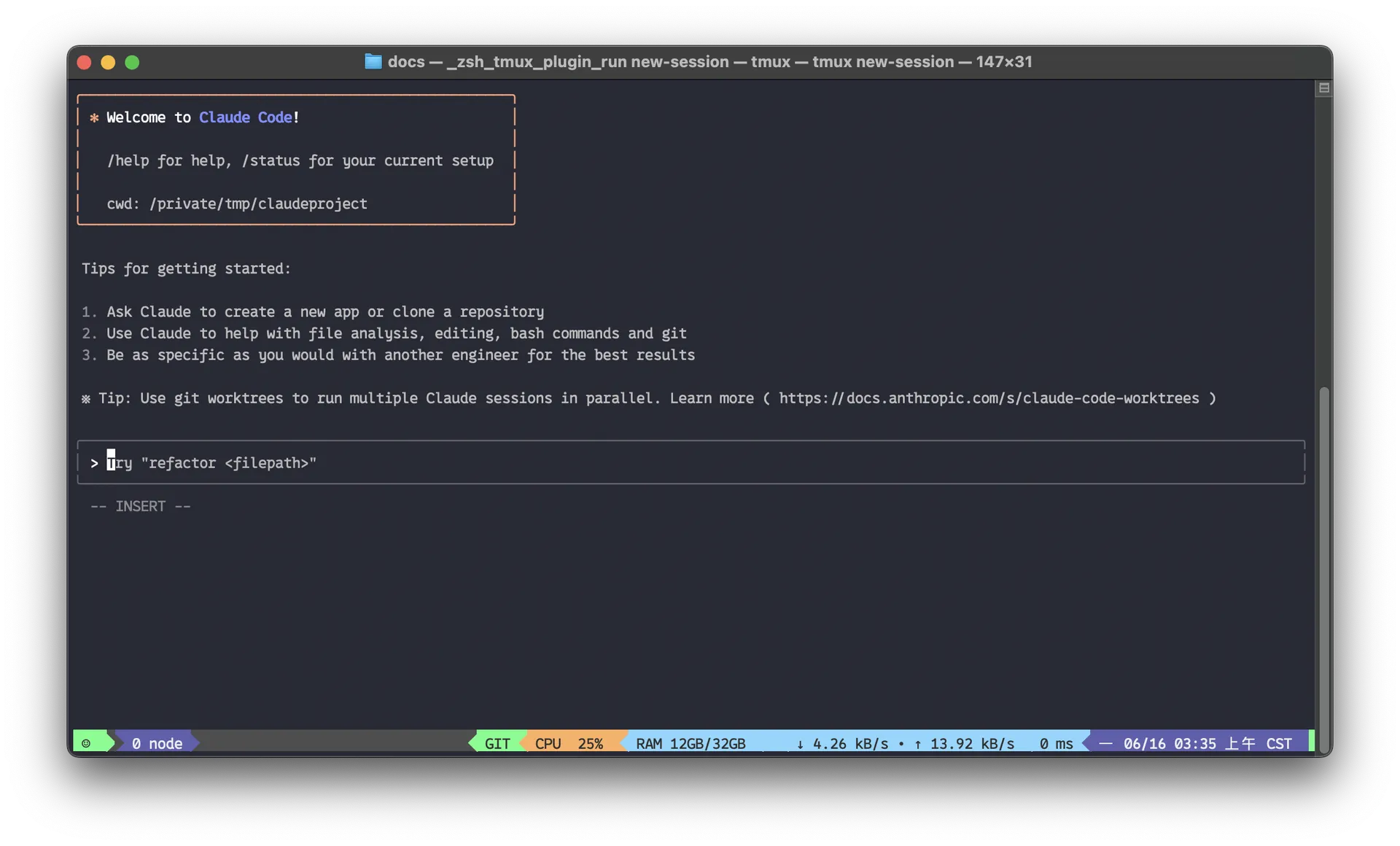
Anthropic’s agentic coding platform for terminal, IDE, desktop, web, CI, and code-review workflows.
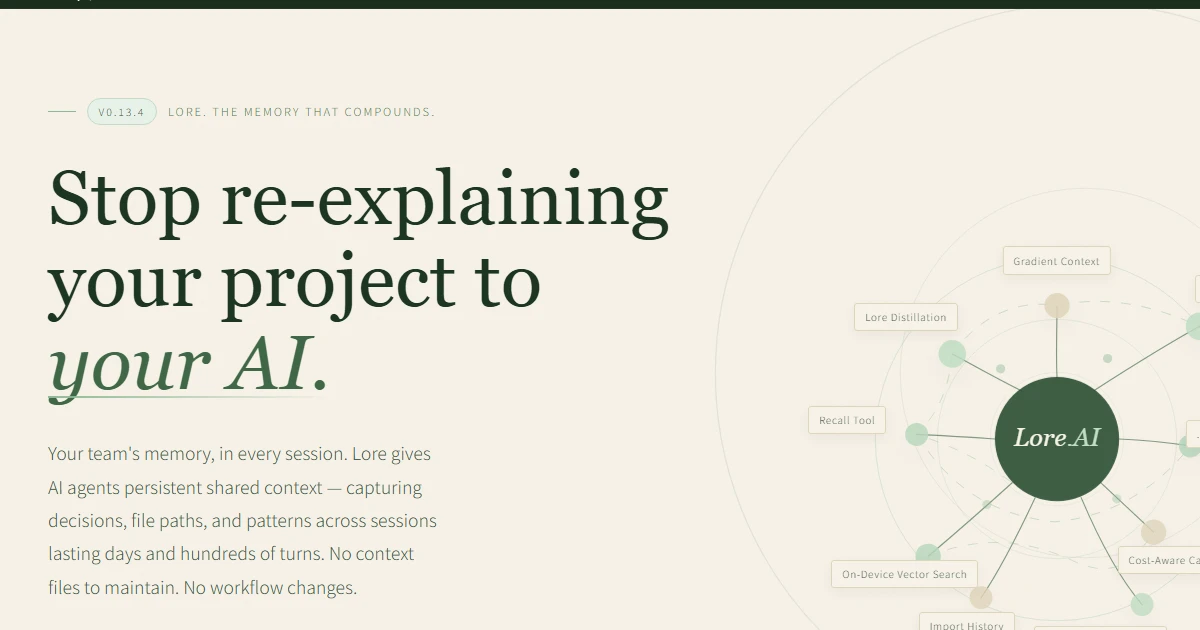
Local memory and context-management gateway that gives Claude Code, Codex, OpenCode, Pi, and similar coding agents durable shared recall.

Minimal terminal coding harness with extensions, skills, tree-structured sessions, and serious multi-provider model support.
Do one more comparison before you commit to AgentsView
Strong picks usually survive one more internal check. Read deeper, compare a neighbor, then leave for the vendor page if the fit still holds.