
Magnitude
Open-source local inference server that profiles your hardware, recommends suitable models, and connects them to coding agents such as Codex, Claude Code, and OpenCode.
Do not bounce yet
Read the fit check, compare one alternative, then decide whether the vendor page is still your best next click.
Quick Verdict
Fast fit check before you leave the page
Make the fit call first. Vendor pages are good at selling, but they rarely tell you where the product is a bad match.
- Developers running coding agents on Apple Silicon or Linux workstations with enough memory for local models
- Privacy-conscious teams evaluating offline-capable inference for non-cloud coding workflows
- Codex, Claude Code, OpenCode, Pi, Hermes, OpenClaw, or Cline users who want a shared local inference layer
- The current product is still on a 0.0.x release line and was created after a major repository/product pivot, so interfaces and positioning may change quickly.
- Local model quality, speed, context capacity, and tool-use reliability vary substantially with hardware and the selected weights.
- Windows support requires WSL; the release page does not publish native Windows binaries.
Compare Next
Take one more internal step before the vendor pitch
This is where visitors usually jump out too early. Read one deeper take or open one alternative so the next click is informed instead of impulsive.
Alternative profile
Prime Agent
MIT-licensed RLM coding and research agent with a persistent IPython control plane, recursive subagents, durable sessions, schedules, goals, and bounded autonomous runs.
Alternative profile
AgentsView
MIT-licensed local-first desktop, web, and CLI workspace for searching coding-agent sessions and analyzing activity, tokens, and costs across tools.
Alternative profile
Good To Go
MIT-licensed CLI that gives AI coding agents a deterministic answer on whether a GitHub pull request is ready to merge.
Magnitude turns local-model setup into an agent-oriented workflow: profile the machine, recommend models that fit, download and tune a runtime, then connect the result to an existing coding agent. That is a direct fit for vibe coding teams seeking local, offline-capable inference without abandoning Codex, Claude Code, OpenCode, or other familiar harnesses. The tradeoff is maturity: the current product remains on a 0.0.x release line, performance depends heavily on hardware and model choice, Windows requires WSL, and discussion attached to the repository’s older browser-testing incarnation should not be mistaken for adoption of today’s local-inference product.
Magnitude is an Apache-2.0 local inference server and CLI built around coding-agent workloads. It profiles a machine, recommends compatible GGUF models, downloads and tunes the selected runtime, and configures supported agent harnesses including Codex, Claude Code, OpenCode, Pi, Hermes, OpenClaw, Cline, and its own harness. Magnitude supports macOS and Linux directly and Windows through WSL. The current 0.0.x release line is young, hardware-dependent, and should not be confused with the repository’s earlier browser-testing product; teams should benchmark their own workloads, review model licenses, and keep a cloud-model fallback for tasks that exceed local capacity.
Why Choose Magnitude?
Choose Magnitude when the difficult part of local agent coding is selecting a model that fits the machine and configuring the harness around it.
Use it to keep prompts and repository files local after the runtime and model have been downloaded, subject to verification of your chosen integrations.
Its multi-harness approach is useful when a team wants one local inference layer behind Codex, Claude Code, OpenCode, Pi, Hermes, OpenClaw, or Cline.
Adopt cautiously: benchmark real coding tasks, inspect generated configuration, verify model licenses, and retain a fallback for workloads beyond local hardware.
Key Features
Profiles local hardware and recommends GGUF models sized for the available chip, memory, and bandwidth.
Downloads, configures, loads, and unloads local models for agent workloads through one CLI-managed inference service.
Connects Codex, Claude Code, OpenCode, Pi, Hermes, OpenClaw, Cline, Oh My Pi, or Magnitude’s built-in harness to the chosen model.
Ships separate CLI, control-node, and inference-node release assets for macOS and Linux, including Metal, CUDA, Vulkan, and CPU-oriented variants.
Supports compatible GGUF models outside the curated catalog for teams that need a specific local model.
Can operate offline after Magnitude and the selected model have been downloaded.
Provides Apache-2.0 source for inspecting and adapting the inference and agent-configuration workflow.
Pros & Cons
- Targets a real friction point in local agent coding: matching models and runtimes to hardware, then wiring them into an existing harness.
- Keeps software cost at zero and avoids per-token API charges when suitable hardware and models are already available.
- Supports several established coding-agent clients rather than requiring a proprietary editor or a single harness.
- Active releases, published platform artifacts, documentation, and an Apache-2.0 license make the early project inspectable.
- The current product is still on a 0.0.x release line and was created after a major repository/product pivot, so interfaces and positioning may change quickly.
- Local model quality, speed, context capacity, and tool-use reliability vary substantially with hardware and the selected weights.
- Windows support requires WSL; the release page does not publish native Windows binaries.
- Downloaded model licenses, storage needs, electricity use, and hardware costs remain outside the software’s free license.
- Independent adoption evidence for the current local-inference product is limited; older Hacker News discussion covers the previous browser-testing incarnation.
Detailed Use Cases for Magnitude
Profile chip, memory, and bandwidth, then review recommended GGUF models before downloading large weights.
Configure Codex, Claude Code, OpenCode, Pi, Hermes, OpenClaw, Cline, or the built-in harness to use local inference.
Run the inference service without network access after the runtime and selected model are available locally.
Compare model quality, context capacity, throughput, storage, power use, and license constraints on the hardware that will actually run the agent.
Who Should Use Magnitude?
Developers running coding agents on Apple Silicon or Linux workstations with enough memory for local models
Privacy-conscious teams evaluating offline-capable inference for non-cloud coding workflows
Codex, Claude Code, OpenCode, Pi, Hermes, OpenClaw, or Cline users who want a shared local inference layer
Open-source evaluators comfortable testing early 0.0.x software and hardware-dependent model quality
Perfect For
Run a coding agent against a local model when source code should remain on the workstation.
Evaluate which quantized coding model fits a laptop or workstation before committing storage and setup time.
Switch Codex, Claude Code, OpenCode, or another supported harness from a hosted endpoint to local inference.
Maintain an offline coding-agent environment after pre-downloading the runtime and model weights.
Technical Details
Direct Competitors
Ollama
LM Studio
llama.cpp
vLLM
LocalAI
Similar Tools You Might Like
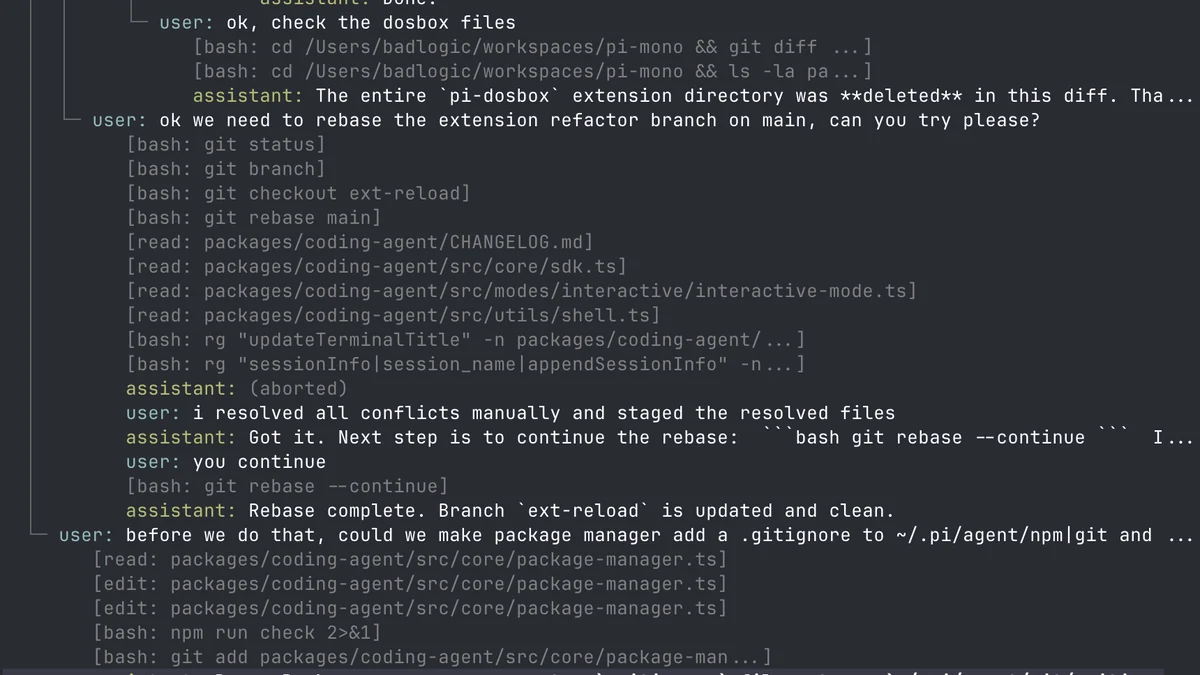
MIT-licensed RLM coding and research agent with a persistent IPython control plane, recursive subagents, durable sessions, schedules, goals, and bounded autonomous runs.
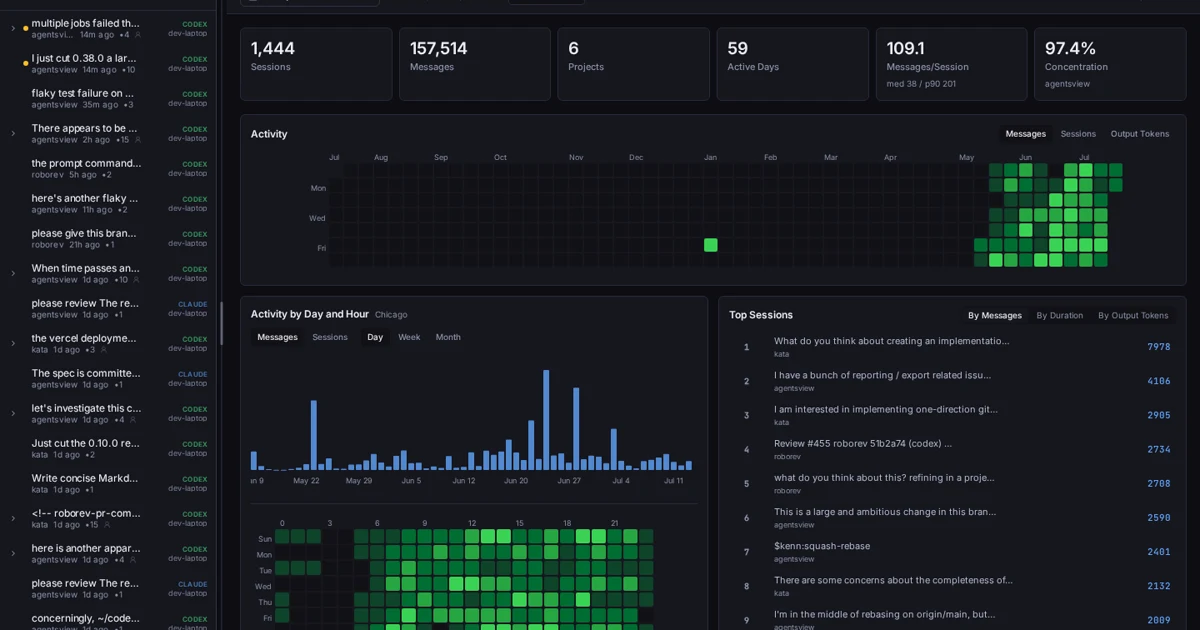
MIT-licensed local-first desktop, web, and CLI workspace for searching coding-agent sessions and analyzing activity, tokens, and costs across tools.
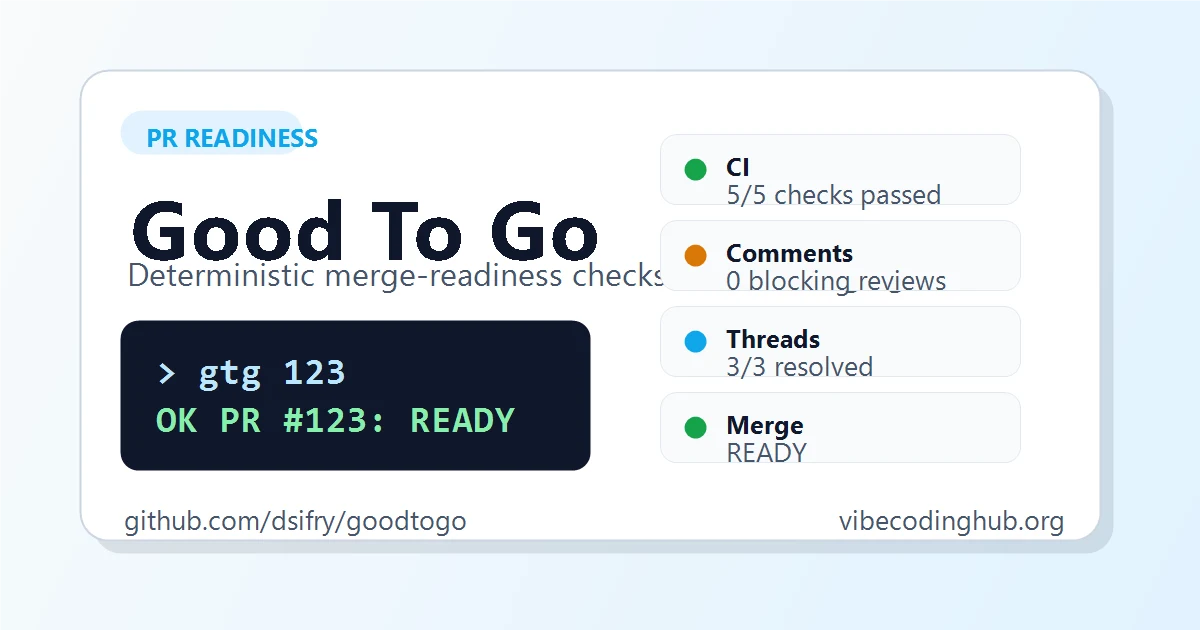
MIT-licensed CLI that gives AI coding agents a deterministic answer on whether a GitHub pull request is ready to merge.
Do one more comparison before you commit to Magnitude
Strong picks usually survive one more internal check. Read deeper, compare a neighbor, then leave for the vendor page if the fit still holds.