
PR Lens
MIT-licensed GitHub App, Action, CLI, and coding-agent skill that redraws each pull request as an animated architecture and data-flow diagram inside the PR.
Do not bounce yet
Read the fit check, compare one alternative, then decide whether the vendor page is still your best next click.
Quick Verdict
Fast fit check before you leave the page
Make the fit call first. Vendor pages are good at selling, but they rarely tell you where the product is a bad match.
- Reviewers who receive agent-generated pull requests and need the shape of a change before the line-by-line pass
- Teams running Claude Code, Cursor, or another skill-aware coding agent that should document the change it just made
- Developers who want a local, bring-your-own-key render of a diff before opening a pull request
- The hosted GitHub App is described only as free for open-source repositories and no private-repository price or paid plan is published, so the cost path for closed-source teams is unclear.
- Diagram quality depends on the model reading the diff, and no accuracy benchmark was found on the site or in the repository at audit time.
- A generated diagram is a model-produced summary of a change and does not replace reading the code it describes.
Compare Next
Take one more internal step before the vendor pitch
This is where visitors usually jump out too early. Read one deeper take or open one alternative so the next click is informed instead of impulsive.
Alternative profile
Code Review Graph
MIT-licensed local code-intelligence graph that gives Claude Code, Codex, Cursor, Copilot, and other MCP clients targeted review context.
Alternative profile
Good To Go
MIT-licensed CLI that gives AI coding agents a deterministic answer on whether a GitHub pull request is ready to merge.
Alternative profile
CodeRabbit
AI code review platform for pull requests, IDEs, and the CLI, built to catch bugs and keep fast-moving agentic teams from merging sloppy changes.
PR Lens is an open-source review aid built for changes that are easier to see than to read. Instead of another line-by-line commenter, it turns a diff into a validated graph document and renders it as animated architecture and data-flow diagrams, posted into the pull request itself. The drawing shows what the change touches and what it leaves alone, colour-codes additions, modifications and removals, and lets a reviewer switch detail levels from the comment. The same graph contract drives a GitHub App, a GitHub Action, an npm CLI, and a coding-agent skill, so the picture can be produced locally against a merge base before a pull request exists. This is directly useful for vibe-coding teams whose agents now generate diffs faster than humans can audit them, but it should be treated as a comprehension aid: the diagram is model-produced, the project publishes no accuracy benchmark, and the free hosted tier is limited to open-source repositories.
PR Lens is an open-source review aid for the pull requests that coding agents now produce faster than teams can read them. A GitHub App, a GitHub Action, an npm CLI, or a coding-agent skill turns a diff into a validated graph document, renders it as animated theme-paired SVG, and posts it as a comment on the pull request itself. The drawing colour-codes the blast radius of a change - new components in green, changed in amber, removed in red - keeps untouched parts of the system in view, and offers detail toggles from the comment instead of a separate dashboard. The CLI analyses a diff against a merge base with a model key supplied by the reviewer (Gemini or OpenAI by default, or any OpenAI-compatible base URL such as Ollama), so a change can be drawn before the pull request exists, and a post-merge export keeps a committed map of the system. The MIT license covers the schema, renderer, CLI, Action, and agent-skill packages; the hosted GitHub App is a separate service that the vendor describes as free for open-source repositories. Treat the diagram as a reading aid that shortens the time to understand a change rather than as proof of runtime behaviour.
Why Choose PR Lens?
Choose PR Lens when pull requests arrive faster than reviewers can build a mental model of what changed, and the diff is large but structurally simple.
Its differentiator is placement: the diagram is generated from a validated graph document and posted inside the pull request, so no reviewer has to leave GitHub or maintain a separate dashboard.
The schema, renderer, CLI, Action, and agent-skill packages are MIT licensed and can be run locally with your own model key, including through an OpenAI-compatible endpoint such as Ollama.
Do not treat the drawing as verification; the diagram summarises a diff, and the project publishes no measured accuracy figures for it.
Key Features
Posts animated architecture and data-flow diagrams as a comment on the pull request itself, so the review stays inside GitHub instead of a separate dashboard.
Colours the blast radius of a change - new components in green, changed in amber, removed in red - and keeps untouched parts of the system on the page.
Ships one graph contract behind four entry points: a GitHub App, a GitHub Action, an npm CLI, and a coding-agent skill.
Analyses a diff against a merge base locally with a reviewer-supplied model key, so a change can be drawn before a pull request exists.
Renders deterministic theme-paired SVG with comment-level detail toggles and a validator that reports every contract problem rather than only the first.
Exports a stored map of the system after merge so the next change has context to draw against.
Pros & Cons
- Targets the comprehension step of review instead of adding another line-level commenter, which fits agent-generated diffs that are large but structurally simple.
- MIT-licensed packages make the pipeline inspectable and partly self-hostable, while the GitHub App path needs no setup at all.
- Model access is bring-your-own-key and includes OpenAI-compatible endpoints such as Ollama, so diagrams can be produced without a vendor account.
- One shared graph schema means the picture posted in the pull request and a local render come from the same document.
- The hosted GitHub App is described only as free for open-source repositories and no private-repository price or paid plan is published, so the cost path for closed-source teams is unclear.
- Diagram quality depends on the model reading the diff, and no accuracy benchmark was found on the site or in the repository at audit time.
- A generated diagram is a model-produced summary of a change and does not replace reading the code it describes.
- The repository was created in late August 2026 and activity is concentrated with a small maintainer group behind Coldtea.
Detailed Use Cases for PR Lens
Install the GitHub App and receive an architecture diagram of each pull request, with new components in green, changed components in amber and removed components in red.
Install the published skill so the coding agent that wrote the diff also produces and validates the graph document, rendering the change beside the code it describes.
Run the CLI against origin/main with your own model key, open the generated SVGs, and fix the change before anyone else has to read it.
Export the graph document into the repository so later changes are drawn with the surrounding system already in context.
Who Should Use PR Lens?
Reviewers who receive agent-generated pull requests and need the shape of a change before the line-by-line pass
Teams running Claude Code, Cursor, or another skill-aware coding agent that should document the change it just made
Developers who want a local, bring-your-own-key render of a diff before opening a pull request
Engineering groups that want a committed map of the system rather than a one-off picture of a single change
Perfect For
Give a reviewer the shape of a large multi-file change before they read a single hunk.
Let the agent that wrote the change also draw it, through the published skill, while the diff is still local.
Review uncommitted work by analysing a diff against origin/main and opening the rendered SVGs before pushing.
Keep a committed system map after merges so the next change is drawn with context.
Technical Details
Direct Competitors
CodeRabbit
Qodo
Open Code Review
Archify
Code Review Graph
Good To Go
Similar Tools You Might Like
MIT-licensed codebase knowledge graph and MCP server for structural search, natural-language exploration, data-flow tracing, and agent-assisted edits across mixed-language repositories.
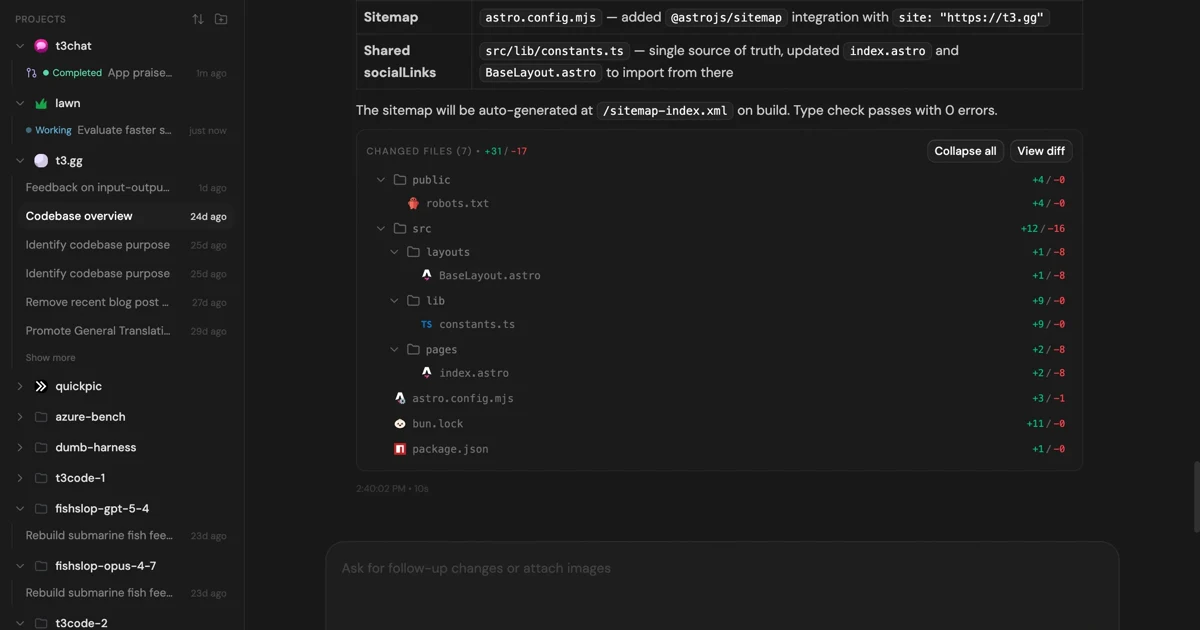
MIT-licensed control plane for running Claude Code, Codex, Cursor, Grok, and OpenCode threads from desktop, web, iOS, and Android clients.
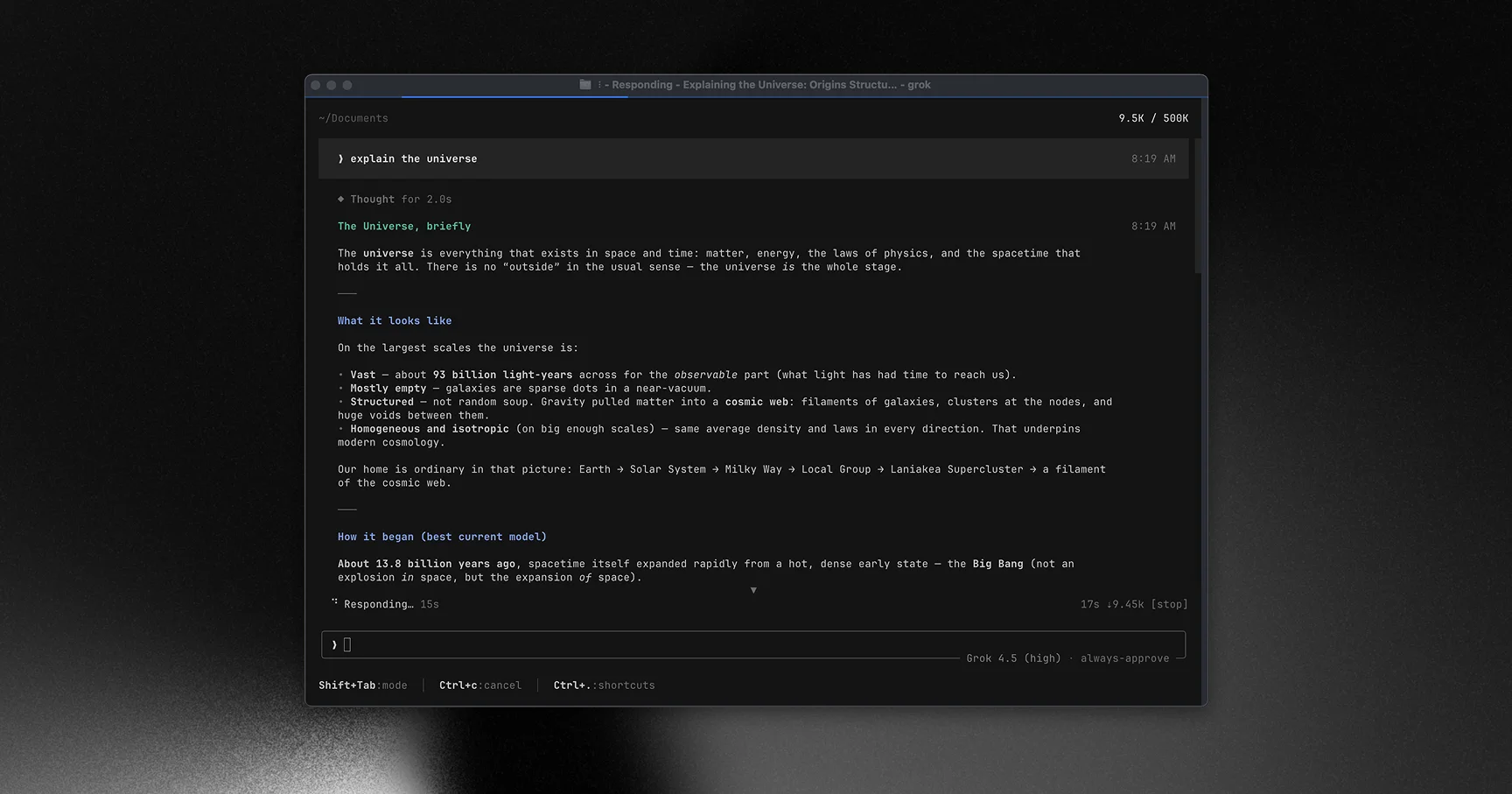
SpaceXAI's Apache-2.0 terminal coding agent with a full-screen TUI, headless automation, ACP integration, and extensible agent workflows.
Alternative Tools to Consider
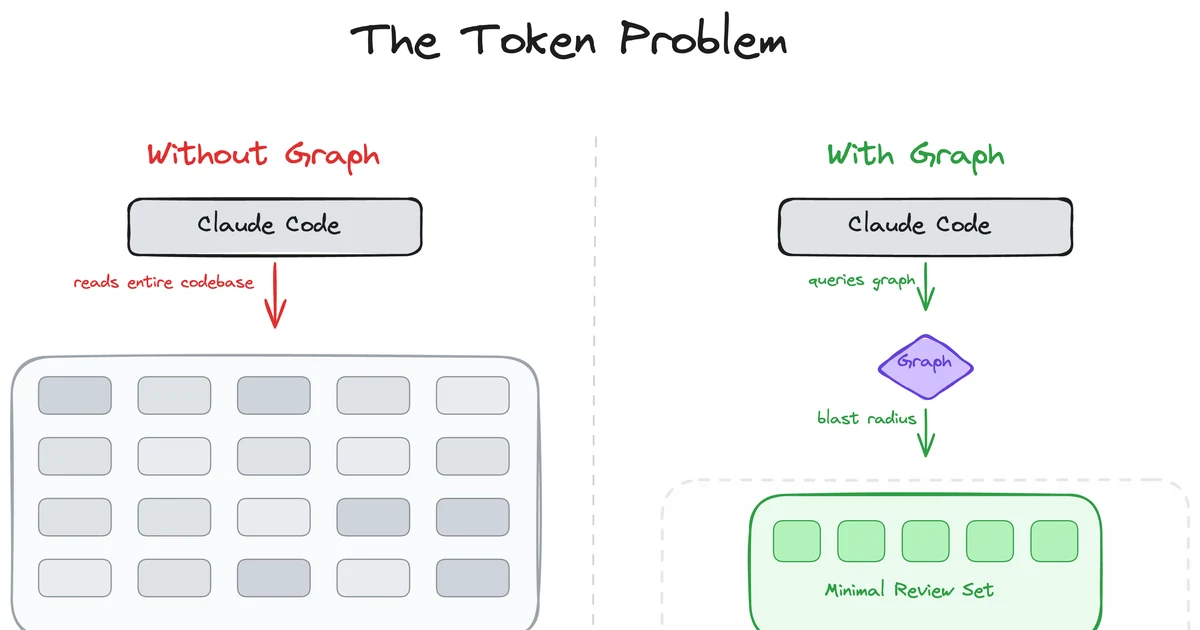
MIT-licensed local code-intelligence graph that gives Claude Code, Codex, Cursor, Copilot, and other MCP clients targeted review context.
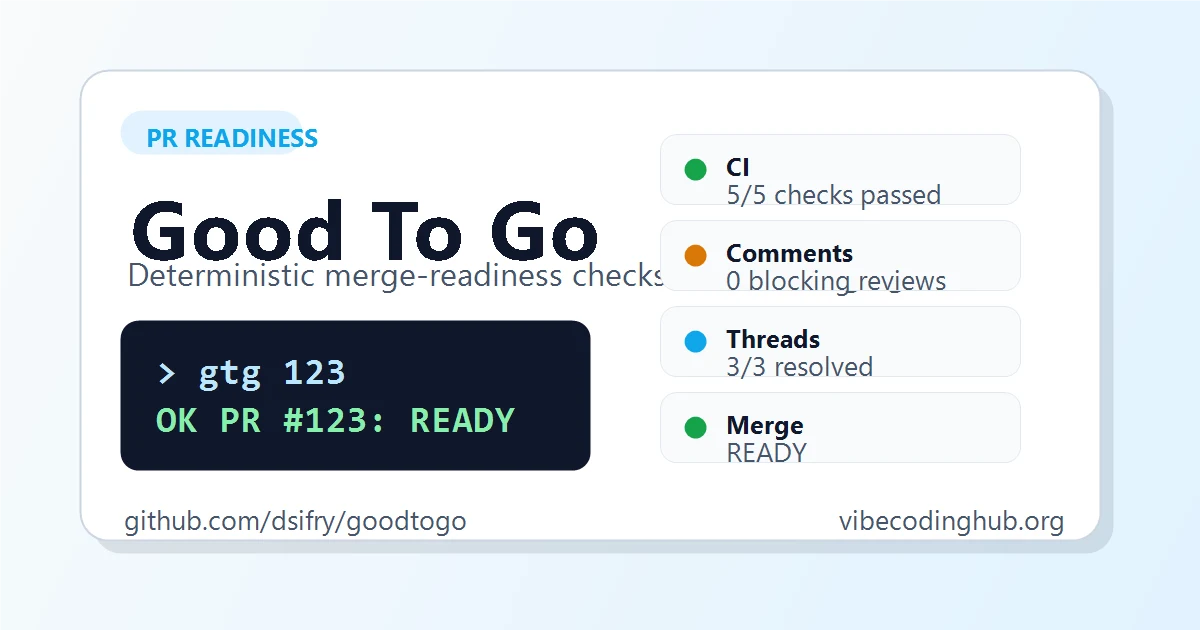
MIT-licensed CLI that gives AI coding agents a deterministic answer on whether a GitHub pull request is ready to merge.

AI code review platform for pull requests, IDEs, and the CLI, built to catch bugs and keep fast-moving agentic teams from merging sloppy changes.

AI code review platform for pull requests, local IDE workflows, issue resolution, and rules enforcement.
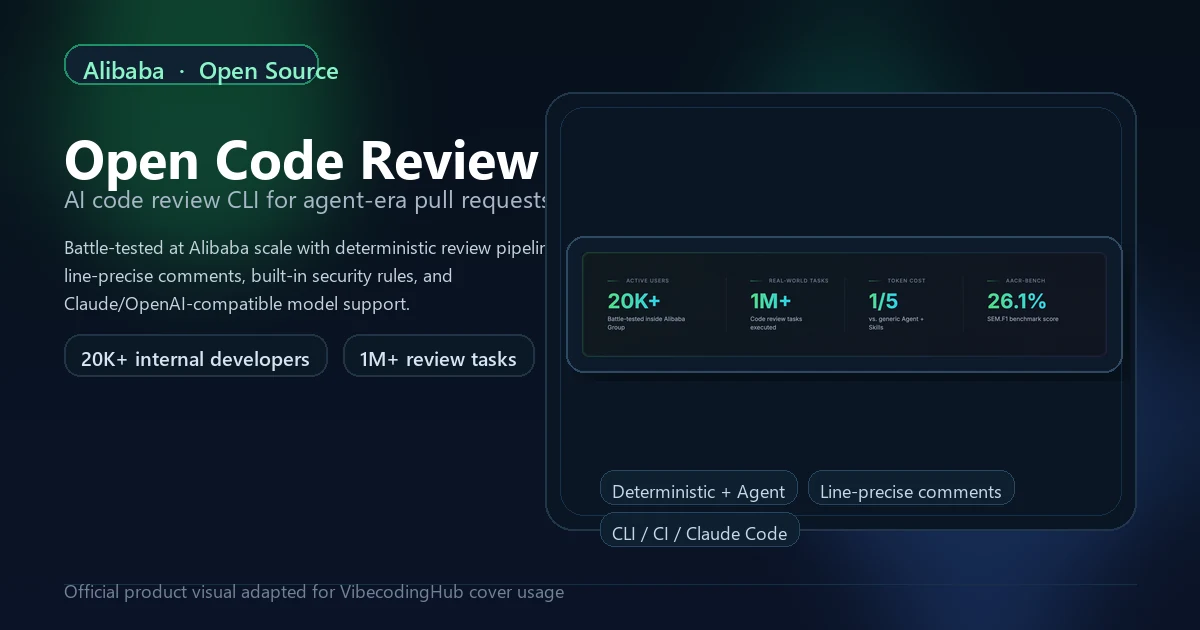
Open-source AI code review CLI that reads diffs, explores repo context, and produces line-level review comments for agent-heavy pull requests.

MIT-licensed agent skill that turns codebases and system descriptions into validated, interactive architecture maps and self-contained HTML/SVG exports.
Do one more comparison before you commit to PR Lens
Strong picks usually survive one more internal check. Read deeper, compare a neighbor, then leave for the vendor page if the fit still holds.