Better Harness
MIT-licensed workflow-inspection plugin that turns coding-agent project and session evidence into prioritized, verifiable improvements.
Do not bounce yet
Read the fit check, compare one alternative, then decide whether the vendor page is still your best next click.
Quick Verdict
Fast fit check before you leave the page
Make the fit call first. Vendor pages are good at selling, but they rarely tell you where the product is a bad match.
- Teams using multiple coding-agent clients that want a shared framework for task understanding, validation, delivery, and learning capture
- Engineering leads reviewing whether agent sessions provide enough evidence to trust generated changes
- Platform engineers maintaining AGENTS.md files, skills, hooks, tests, report tooling, and host-specific agent integrations
- It is an analysis and workflow layer, not a coding agent, model, or automatic guarantee that recommendations improve delivery.
- Installation, invocation, and report output vary by host, so there is no single universal quickstart.
- Pi, Kimi Code, WorkBuddy, and Grok are documented with narrower adapter-support boundaries rather than the same verified interactive path as the six primary hosts.
Compare Next
Take one more internal step before the vendor pitch
This is where visitors usually jump out too early. Read one deeper take or open one alternative so the next click is informed instead of impulsive.
Alternative profile
Compound Engineering
MIT-licensed workflow plugin that gives Claude Code, Codex, Cursor, OpenCode, and other coding agents a plan-work-review-compound engineering loop.
Alternative profile
AgentsView
MIT-licensed local-first desktop, web, and CLI workspace for searching coding-agent sessions and analyzing activity, tokens, and costs across tools.
Alternative profile
Code Review Graph
MIT-licensed local code-intelligence graph that gives Claude Code, Codex, Cursor, Copilot, and other MCP clients targeted review context.
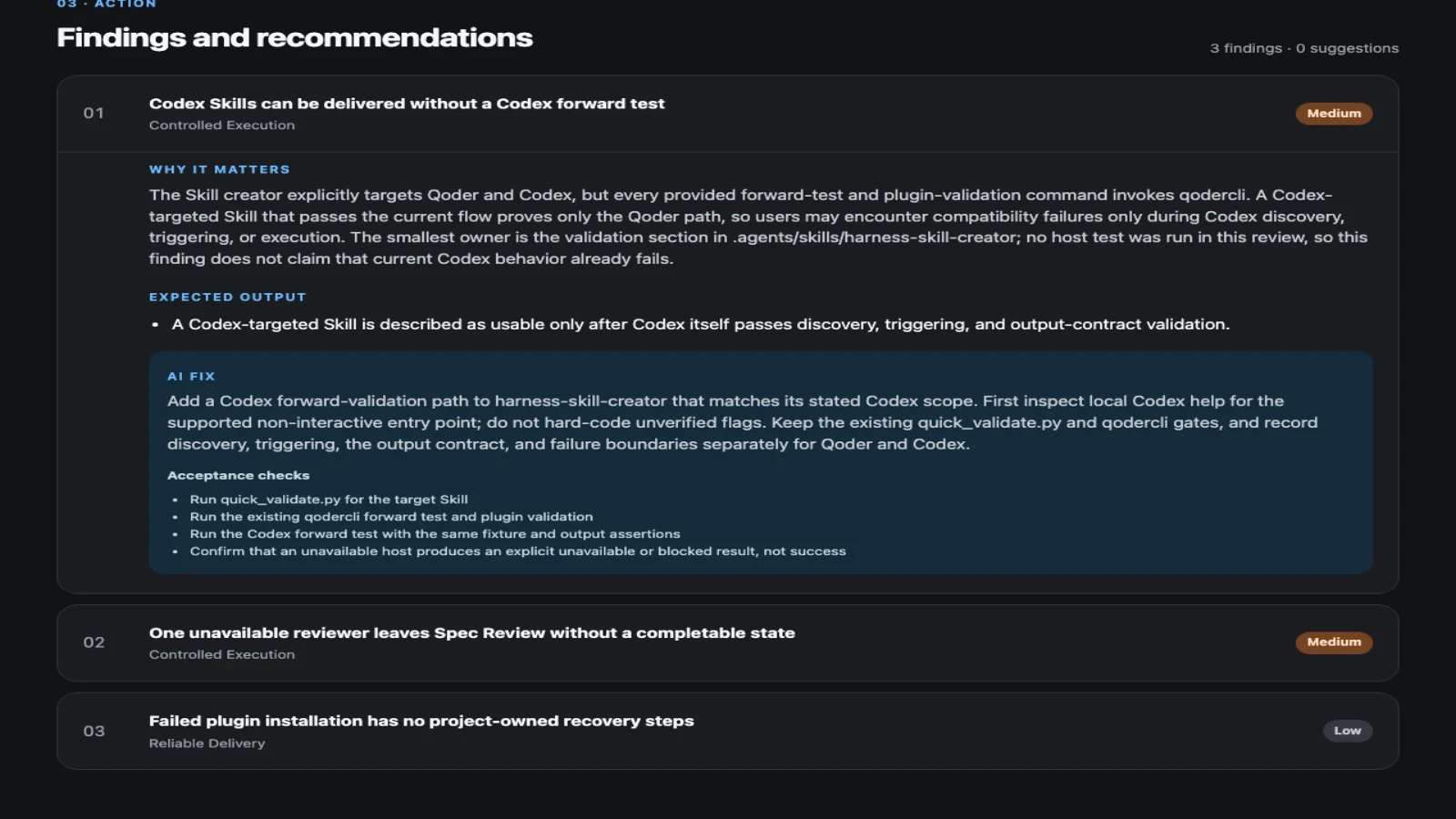
Better Harness is an open-source workflow-inspection layer for teams using Claude Code, Codex, Qoder, Cursor, Qwen Code, GitHub Copilot CLI, and several additional coding-agent hosts. Instead of proposing another model or terminal chat, it analyzes the loop around an agent: whether the task was understood, execution stayed controlled, changes were validated, delivery evidence is reliable, and useful learning was captured for the next run. Its reports pair observed evidence with impact, a bounded repair, and acceptance checks, while the read-only Harness Inspector traces intent through sessions, tool calls, files, artifacts, and commits. The approach is promising for evidence-conscious vibe coding, but it remains a young workflow layer with host-specific setup and uneven adapter verification rather than a universal agent runtime.
Better Harness is an open-source harness-engineering toolkit that runs through existing coding agents instead of replacing them. Its host adapters, skills, experiment runner, report generator, and read-only Harness Inspector analyze project guidance, session traces, tool activity, files, and commits across Claude Code, Codex, Qoder, Cursor, Qwen Code, GitHub Copilot CLI, Pi, Kimi Code, WorkBuddy, and Grok. Reports keep missing evidence explicit and organize findings around task understanding, controlled execution, validation, delivery, and learning capture, helping vibe-coding teams improve the workflow around agents rather than judging a code diff in isolation.
Why Choose Better Harness?
Choose Better Harness when agent-generated changes are arriving faster than your team can explain, validate, or improve the workflow that produced them.
Its strongest differentiator is evidence-bounded reporting: missing evidence stays visible, and findings include a scoped repair plus acceptance checks instead of relying on an opaque quality score.
The host-adapter model covers several major coding agents without forcing teams to replace their existing client, model provider, or repository workflow.
Do not treat a Harness report as causal proof of productivity or correctness. Pilot the tool on representative sessions, review its evidence access, and verify each recommendation against project-owned checks.
Key Features
Runs inside supported coding agents and turns project plus session evidence into findings, prioritized improvements, and verifiable next steps.
Supports host-specific installation paths for Claude Code, Codex Desktop and CLI, Qoder, Cursor, Qwen Code, GitHub Copilot CLI, Pi, Kimi Code, WorkBuddy, and Grok.
Evaluates the Agent Work Loop across task understanding, controlled execution, change validation, reliable delivery, and learning capture.
Produces HTML, Markdown, or host-native reports with explicit evidence, impact, bounded repairs, acceptance checks, and visible evidence gaps.
Provides a read-only Harness Inspector for tracing product intent through sessions, tool calls, files, artifacts, and commits.
Includes harness-as-code configuration, experiment and comparison workflows, sample reports, reusable skills, and host adapter documentation.
Pros & Cons
- Focuses on the quality of the agent workflow and its evidence rather than adding another chat interface or model wrapper.
- MIT-licensed source, public architecture documentation, sample reports, and explicit evidence limits make the approach inspectable.
- Broad host coverage lets teams apply a similar improvement framework across several popular coding-agent clients.
- Concrete acceptance checks and bounded repairs make findings easier to review than an opaque score or generic best-practices list.
- It is an analysis and workflow layer, not a coding agent, model, or automatic guarantee that recommendations improve delivery.
- Installation, invocation, and report output vary by host, so there is no single universal quickstart.
- Pi, Kimi Code, WorkBuddy, and Grok are documented with narrower adapter-support boundaries rather than the same verified interactive path as the six primary hosts.
- The project is young, with limited independent production evidence and no basis yet for treating repository stars or recorded report trends as causal productivity proof.
Detailed Use Cases for Better Harness
Review task understanding, controlled execution, change validation, reliable delivery, and learning capture using evidence from the project and agent session.
Use the read-only Harness Inspector to follow sessions, tool calls, files, artifacts, and commits without relying on a summary alone.
Generate prioritized improvements with explicit impact, scoped next steps, and acceptance checks that a reviewer can verify.
Run controlled workflow variants and inspect the available evidence while keeping unsupported claims and missing signals visible.
Who Should Use Better Harness?
Teams using multiple coding-agent clients that want a shared framework for task understanding, validation, delivery, and learning capture
Engineering leads reviewing whether agent sessions provide enough evidence to trust generated changes
Platform engineers maintaining AGENTS.md files, skills, hooks, tests, report tooling, and host-specific agent integrations
Developers who need a read-only view of sessions, tool calls, files, artifacts, and commits before changing their harness
Perfect For
Audit whether coding-agent tasks include clear intent, acceptance criteria, validation evidence, and reliable delivery steps.
Inspect session traces and tool calls when a generated change lacks a trustworthy explanation of how it was produced and checked.
Run controlled harness experiments or compare workflow variants while keeping missing evidence and limitations visible.
Generate a reviewable improvement backlog for AGENTS.md guidance, skills, hooks, tests, reports, and other agent-work-loop infrastructure.
Technical Details
Direct Competitors
Compound Engineering
AgentsView
Code Review Graph
Claude Code
OpenAI Codex
Similar Tools You Might Like
MIT-licensed workflow plugin that gives Claude Code, Codex, Cursor, OpenCode, and other coding agents a plan-work-review-compound engineering loop.

MIT-licensed skills framework and software-development methodology that makes Claude Code, Codex, Cursor, OpenCode, Pi, and other coding agents follow spec, TDD, review, and branch workflows.
MIT-licensed engineering skill pack that gives Claude Code, Codex, Cursor, Gemini CLI, OpenCode, and other coding agents repeatable senior-engineer workflows.
Alternative Tools to Consider
MIT-licensed workflow plugin that gives Claude Code, Codex, Cursor, OpenCode, and other coding agents a plan-work-review-compound engineering loop.
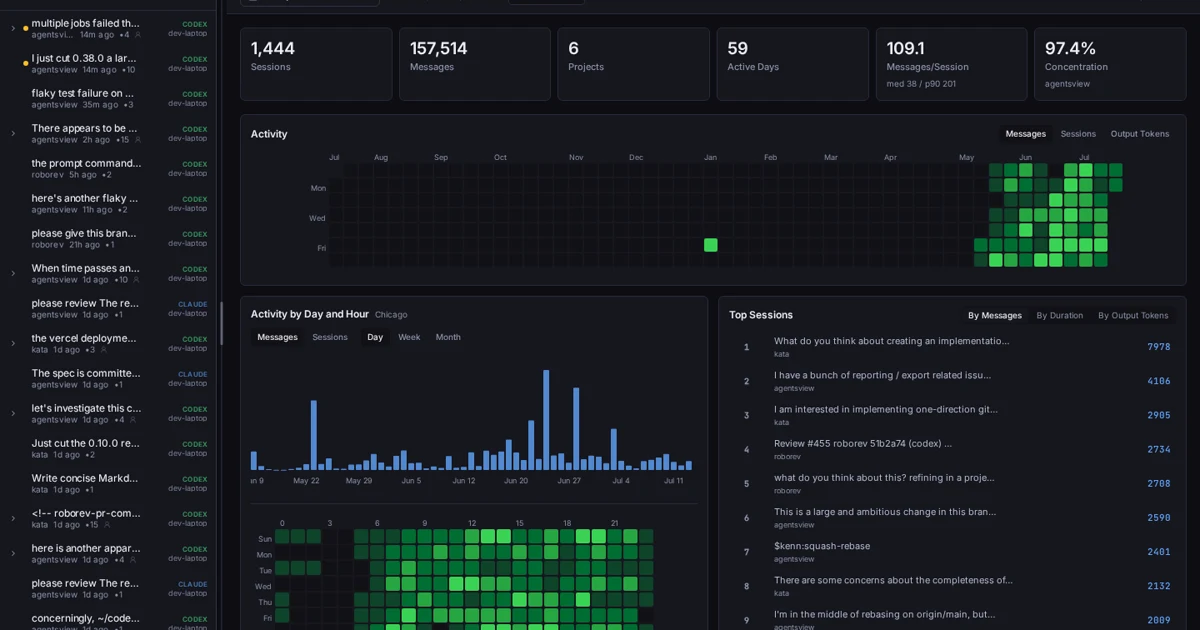
MIT-licensed local-first desktop, web, and CLI workspace for searching coding-agent sessions and analyzing activity, tokens, and costs across tools.
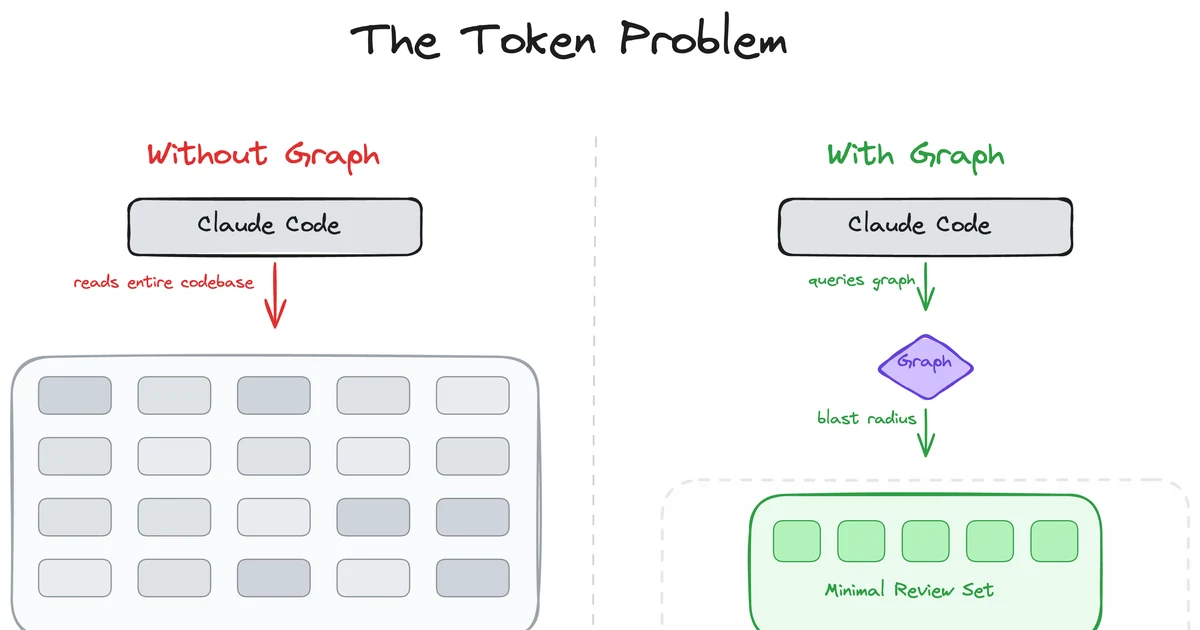
MIT-licensed local code-intelligence graph that gives Claude Code, Codex, Cursor, Copilot, and other MCP clients targeted review context.
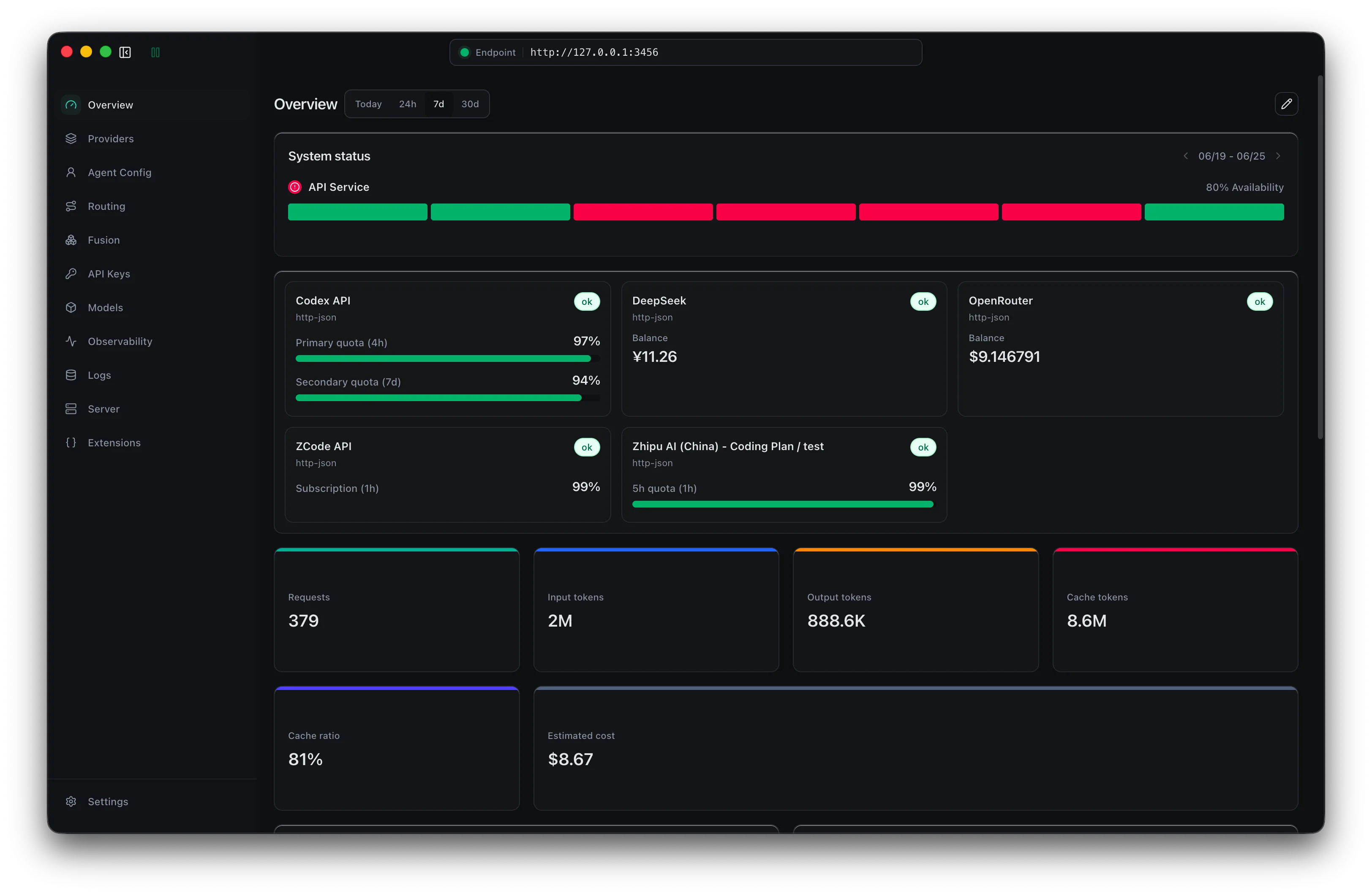
MIT-licensed local gateway and desktop control plane for routing Claude Code, Codex, Grok CLI, and compatible agents across model providers.
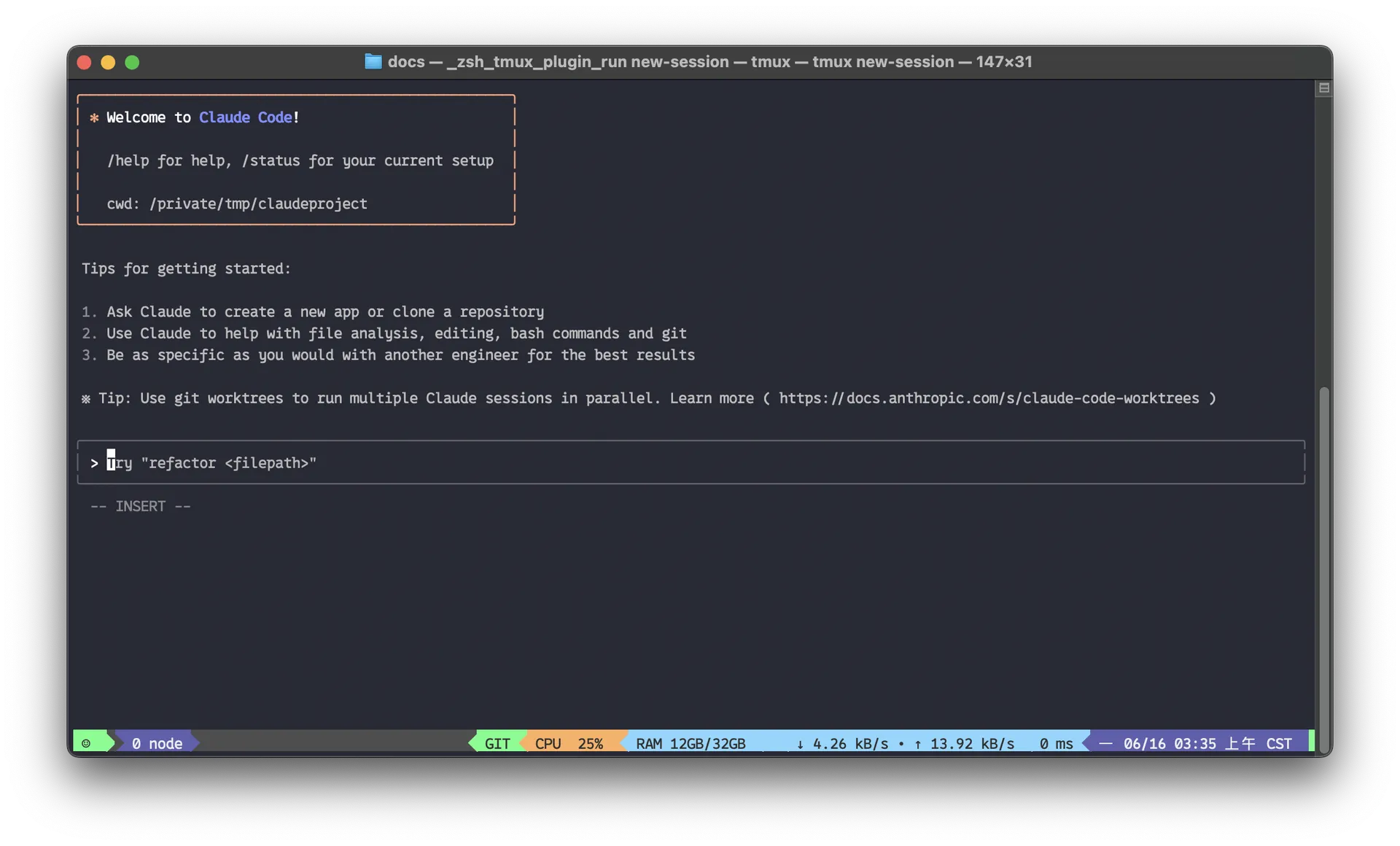
Anthropic’s agentic coding platform for terminal, IDE, desktop, web, CI, and code-review workflows.

Source-available VS Code and Cursor interface for Claude Code with checkpoints, inline diffs, history, permissions, and extension marketplaces.
Do one more comparison before you commit to Better Harness
Strong picks usually survive one more internal check. Read deeper, compare a neighbor, then leave for the vendor page if the fit still holds.