ai-memory
MIT-licensed local memory server and CLI for carrying coding context, summaries, and handoffs across Claude Code, Codex, Cursor, OpenCode, and other agent clients.
Do not bounce yet
Read the fit check, compare one alternative, then decide whether the vendor page is still your best next click.
Quick Verdict
Fast fit check before you leave the page
Make the fit call first. Vendor pages are good at selling, but they rarely tell you where the product is a bad match.
- Developers switching between Claude Code, OpenAI Codex, Cursor, OpenCode, Gemini CLI, Kimi Code, Kiro, Grok, and related coding agents
- Teams running long-lived agent work that needs explicit summaries, project memory, and cross-session handoffs
- Privacy-conscious engineers comparing local memory servers, transcript indexes, context-compression tools, and cloud agent memory
- A memory server creates another sensitive store for source context, prompts, tool activity, file paths, summaries, and project decisions.
- Optional LLM consolidation, reranking, or embeddings can send bounded memory content to configured providers and need a deliberate data policy.
- Non-loopback deployment requires real network hardening: bearer authentication does not encrypt traffic, so remote access also needs TLS and strict host controls.
Compare Next
Take one more internal step before the vendor pitch
This is where visitors usually jump out too early. Read one deeper take or open one alternative so the next click is informed instead of impulsive.
Alternative profile
AgentsView
MIT-licensed local-first desktop, web, and CLI workspace for searching coding-agent sessions and analyzing activity, tokens, and costs across tools.
Alternative profile
Headroom
Apache-2.0 context-compression layer that wraps Claude Code, Codex, Cursor, OpenCode, and MCP clients so agents send fewer tool-output and history tokens.
Alternative profile
Claude-Mem
Open-source, local-first memory engine for coding agents, with optional CMEM Cloud sync and a private MCP endpoint for cross-device recall.
ai-memory is worth considering when the costly part of vibe coding is no longer generating code but preserving the reasoning around it. It gives supported coding agents a shared, self-hosted place for bounded session evidence, searchable project memory, summaries, and handoffs, so a developer can leave Claude Code and continue in Codex or another harness without reconstructing every decision from scratch.
ai-memory is a self-hosted memory layer for developers who move work between coding agents. Its Rust server, CLI, MCP tools, and lifecycle hooks capture bounded session events, build searchable project memory, and generate handoffs across Claude Code, Codex, OpenCode, Cursor, Kimi Code, Kiro, Grok, and other supported clients. A narrower managed-workstream mode can resume supported terminal harnesses such as Claude Code, Codex, OpenCode, Kimi Code, Kiro, and Grok. Full-text search works without an LLM, while optional model and embedding providers add consolidation, reranking, and semantic retrieval. The trade-off is a sensitive new persistence and network boundary: teams must scope capture rules, protect stored repository context and credentials, and authenticate and encrypt any non-loopback deployment.
Why Choose ai-memory?
Choose ai-memory when real projects move between Claude Code, Codex, Cursor, OpenCode, Gemini CLI, Kimi Code, Kiro, Grok, or other agent clients and continuity matters more than another chat interface.
Its strongest fit is multi-day coding work where decisions, blockers, project rules, and handoff context should survive vendor-specific sessions.
The zero-LLM full-text path is valuable because teams can start local and add consolidation, reranking, or semantic embeddings only when the benefit justifies provider exposure and cost.
Do not install it casually on sensitive work: captured context becomes a new data store, client lifecycle coverage is uneven, native Windows support is experimental, and non-loopback access needs TLS as well as authentication.
Key Features
Persists bounded coding-session observations, summaries, decisions, and handoffs in a self-hosted Rust service instead of leaving continuity inside one agent transcript.
Supports cross-agent handoff and managed workstream resume across Claude Code, Codex, OpenCode, Pi, Kimi Code, Command Code, Kiro CLI, Grok Build, and other documented clients.
Exposes searchable memory through MCP and HTTP surfaces, with full-text search available without model keys and optional semantic embeddings or LLM reranking.
Generates client-specific MCP configuration and lifecycle hooks while preserving capture exclusions and documenting clients that lack true session-end or handoff-injection events.
Provides project and workspace scoping, backup and restore, capture-policy inspection, authentication options, and administrative activity views for longer-running deployments.
Ships Docker, Arch, Linux, macOS, and experimental native Windows paths plus checksummed release artifacts.
Pros & Cons
- Cross-vendor continuity reduces lock-in and lets developers carry project decisions between coding agents instead of rebuilding context manually.
- Zero-LLM full-text search offers a useful local baseline before teams opt into cloud consolidation, reranking, or embeddings.
- The support matrix documents important lifecycle limitations rather than pretending every client can capture and resume sessions identically.
- MIT licensing, frequent tagged releases, 52 listed contributors, release checksums, and active same-day development make the implementation inspectable.
- A memory server creates another sensitive store for source context, prompts, tool activity, file paths, summaries, and project decisions.
- Optional LLM consolidation, reranking, or embeddings can send bounded memory content to configured providers and need a deliberate data policy.
- Non-loopback deployment requires real network hardening: bearer authentication does not encrypt traffic, so remote access also needs TLS and strict host controls.
- Client capabilities vary; some agents have MCP only, some cannot inject handoffs, and some require manual finalization to produce a true end-of-session summary.
- Native Windows support is experimental, release downloads are still modest, and no direct Hacker News discussion was found during the audit.
Detailed Use Cases for ai-memory
Generate and accept an explicit handoff when work starts in Claude Code and continues in Codex, OpenCode, Kimi Code, or another supported harness.
Recover prior implementation choices, blockers, summaries, and scoped project memory without manually searching several vendor transcript formats.
Use searchable self-hosted memory without model keys, then opt into consolidation, reranking, or embeddings only after reviewing the data boundary.
Combine lifecycle capture, managed resume, backup, scoped routing, and administrative activity views while keeping live code and tests authoritative.
Who Should Use ai-memory?
Developers switching between Claude Code, OpenAI Codex, Cursor, OpenCode, Gemini CLI, Kimi Code, Kiro, Grok, and related coding agents
Teams running long-lived agent work that needs explicit summaries, project memory, and cross-session handoffs
Privacy-conscious engineers comparing local memory servers, transcript indexes, context-compression tools, and cloud agent memory
Agent-platform builders evaluating MCP, lifecycle hooks, managed workstreams, capture policies, and portable context
Perfect For
Quit one coding agent mid-task and resume the same project workstream in another supported harness with an explicit handoff.
Search prior implementation decisions, blockers, summaries, and project rules without reopening many vendor-specific transcript stores.
Give several local coding clients one MCP-accessible memory layer while keeping a zero-LLM full-text baseline.
Capture and review bounded lifecycle evidence for long-running agent work, then back up or migrate the memory store under team control.
Technical Details
Direct Competitors
OpenViking
Claude-Mem
AgentsView
Mem0
Recall
Headroom
Similar Tools You Might Like
MIT-licensed codebase knowledge graph and MCP server for structural search, natural-language exploration, data-flow tracing, and agent-assisted edits across mixed-language repositories.
MIT-licensed control plane for running Claude Code, Codex, Cursor, Grok, and OpenCode threads from desktop, web, iOS, and Android clients.
MIT-licensed RLM coding and research agent with a persistent IPython control plane, recursive subagents, durable sessions, schedules, goals, and bounded autonomous runs.
Alternative Tools to Consider
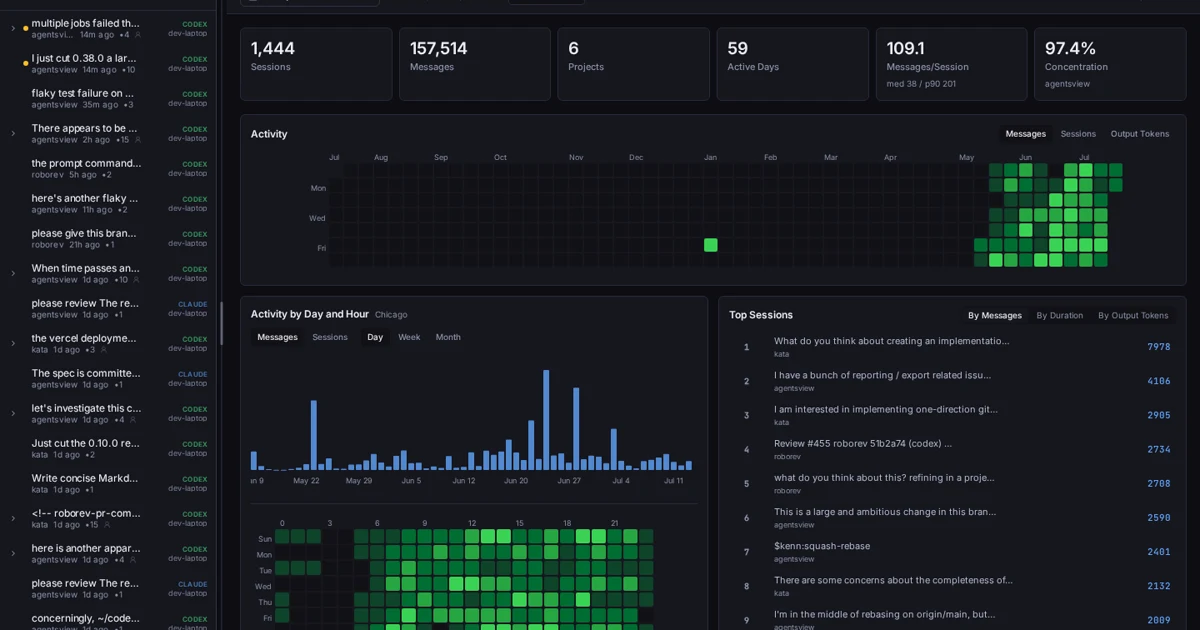
MIT-licensed local-first desktop, web, and CLI workspace for searching coding-agent sessions and analyzing activity, tokens, and costs across tools.
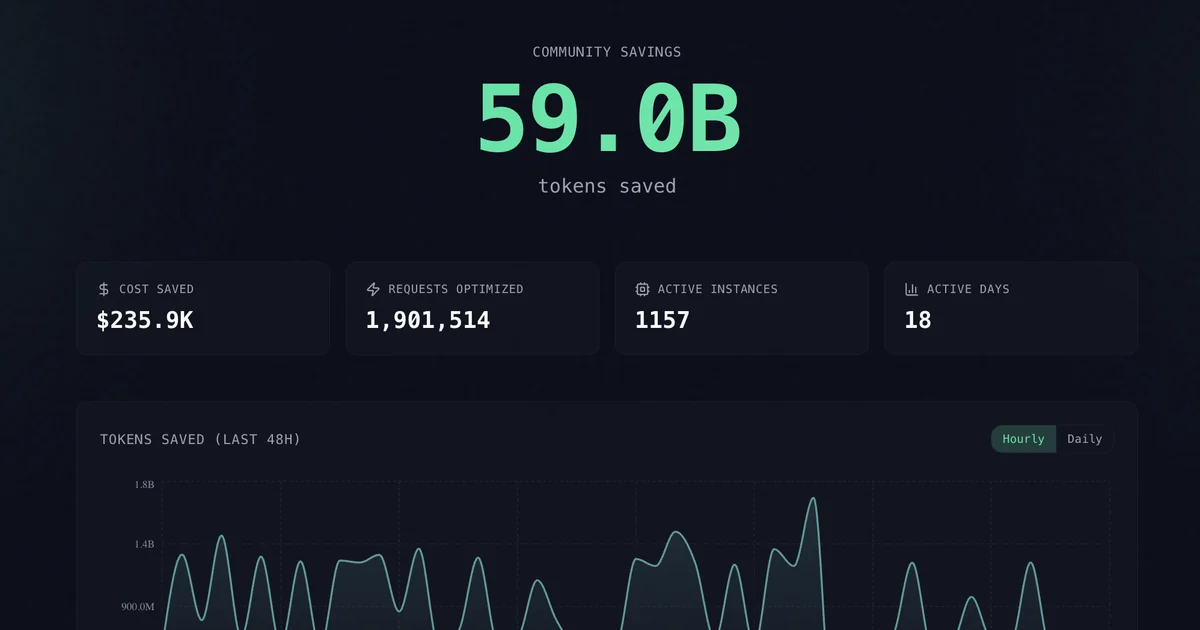
Apache-2.0 context-compression layer that wraps Claude Code, Codex, Cursor, OpenCode, and MCP clients so agents send fewer tool-output and history tokens.

Open-source, local-first memory engine for coding agents, with optional CMEM Cloud sync and a private MCP endpoint for cross-device recall.

Universal memory layer for AI agents that adds persistent context, retrieval, and personalization to coding workflows.

Open-source context database for AI agents that organizes memory, resources, and skills through a file-system-style hierarchy.
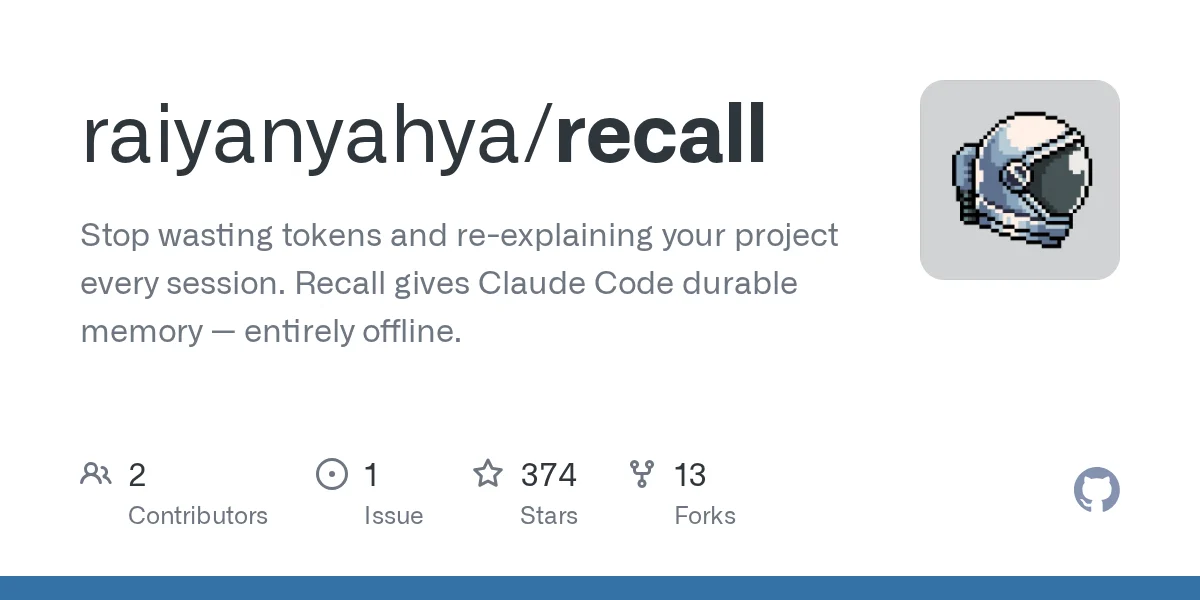
Fully local Claude Code memory plugin that logs sessions and writes compact resume context without sending project data to an external model.
Do one more comparison before you commit to ai-memory
Strong picks usually survive one more internal check. Read deeper, compare a neighbor, then leave for the vendor page if the fit still holds.