
Atlas
Open-source macOS workspace that links coding-agent sessions to commits and shares local project memory across Claude Code, Codex, and ACP agents.
Do not bounce yet
Read the fit check, compare one alternative, then decide whether the vendor page is still your best next click.
Quick Verdict
Fast fit check before you leave the page
Make the fit call first. Vendor pages are good at selling, but they rarely tell you where the product is a bad match.
- macOS developers coordinating Claude Code, Codex, or several coding agents in one repository
- Teams that need auditable links between agent sessions, file changes, reasoning context, and commits
- Developers maintaining shared project memory through AGENTS.md, CLAUDE.md, Markdown notes, and prior sessions
- The product is explicitly alpha; workflows, data formats, and team-roadmap features may change quickly.
- Only macOS is supported by published installers; Linux and Windows builds are documented as untested.
- Long-tail ACP agents are still undergoing QA, so protocol compatibility does not guarantee equal integration quality.
Compare Next
Take one more internal step before the vendor pitch
This is where visitors usually jump out too early. Read one deeper take or open one alternative so the next click is informed instead of impulsive.
Alternative profile
Cursor
AI code editor with local, cloud, CLI, and mobile coding agents
Alternative profile
Warp
Warp is an agentic development environment that combines a modern terminal, built-in and cloud coding agents, and support for external CLI agents like Claude Code, Codex, and Gemini CLI.
Alternative profile
Zedra
Open-source mobile control plane and remote code editor for running Claude Code, Codex, and other AI coding agents from iPhone or Android.
Atlas treats agent-coding history as part of the software record instead of disposable terminal output. The macOS workspace connects sessions to commits, shares local project memory across Claude Code, Codex, its native agent, and ACP-compatible tools, and puts plans, notes, terminals, diffs, research, and activity in one interface. That is a strong fit for vibe-coding teams that need provenance and continuity, but Atlas remains alpha software with macOS-only supported binaries, uneven long-tail integration maturity, and privacy settings that deserve deliberate review.
Atlas is a native macOS workspace for the work around agent-written code: plans, project knowledge, parallel agent threads, diffs, terminals, and a commit graph. It records agent sessions locally, links them to resulting commits as checkpoints, and assembles shared project context for Claude Code, Codex, Atlas’s native agent, and ACP-compatible tools. The current product is explicitly alpha, only macOS is supported, and long-tail ACP integrations are still undergoing QA. Official binaries also enable opt-out PostHog telemetry by default, with account linkage available separately; teams should review the documented event catalog, disable sharing when appropriate, and keep normal code-review and credential controls in place.
Why Choose Atlas?
Choose Atlas when the missing layer in your agent workflow is traceability from a Git commit back to the session and context that created it.
Use its shared local memory when work moves between Claude Code, Codex, and other ACP-compatible agents without a clean handoff.
The integrated editor, terminal, Git graph, knowledge base, research tools, and activity log reduce the fragmentation around long agent sessions.
Adopt cautiously: start with non-sensitive repositories, inspect the alpha release, review telemetry and account-link settings, and keep Git plus project tests as the source of truth.
Key Features
Links each coding-agent session to the commits and file changes it produced, preserving prompts, tool activity, and checkpoint context beside Git history.
Runs Claude Code, Codex, Atlas’s native Cersei agent, and ACP-registry agents in parallel tabs against the same repository.
Builds shared on-device project memory from plans, decisions, failures, knowledge notes, CLAUDE.md, AGENTS.md, and imported agent history.
Provides a native workspace with editor, terminal, commit graph, diffs, knowledge base, research tools, browser, spatial canvases, and activity logs.
Keeps notes in Markdown, canvases in JSON, sessions in a local SQLite database, and most project state in inspectable local files.
Supports local-only operation without an account, with optional organization sign-in and sync foundations for future team features.
Documents its telemetry implementation, event properties, opt-out controls, account-link behavior, and inert source-build configuration.
Pros & Cons
- Solves a distinct provenance and continuity problem by joining agent transcripts, project memory, Git commits, and review surfaces.
- MIT-licensed source, documented architecture, active development, and published Apple Silicon and Intel release assets make the alpha unusually inspectable.
- Multi-agent support reduces lock-in and lets teams carry local context between Claude Code, Codex, and ACP-compatible tools.
- Plain-text knowledge and local-first defaults preserve an exit path to conventional editors and Git workflows.
- The product is explicitly alpha; workflows, data formats, and team-roadmap features may change quickly.
- Only macOS is supported by published installers; Linux and Windows builds are documented as untested.
- Long-tail ACP agents are still undergoing QA, so protocol compatibility does not guarantee equal integration quality.
- Official binaries enable opt-out analytics by default, and signing in can merge prior device analytics into the account identity unless linkage is disabled.
- Repository popularity is strong for an early project, but independent production-adoption evidence is currently limited.
Detailed Use Cases for Atlas
Open a checkpoint beside Git history to recover the session, prompts, tool activity, and files associated with a change.
Share plans, decisions, failures, project instructions, and local semantic memory between Claude Code, Codex, and ACP tools.
Keep several independent agent runs visible in one workspace while comparing branches, diffs, terminals, and activity.
Store project notes in Markdown, reference files and prior sessions in prompts, and keep conventional Git and editor workflows available.
Who Should Use Atlas?
macOS developers coordinating Claude Code, Codex, or several coding agents in one repository
Teams that need auditable links between agent sessions, file changes, reasoning context, and commits
Developers maintaining shared project memory through AGENTS.md, CLAUDE.md, Markdown notes, and prior sessions
Open-source evaluators willing to test alpha software and inspect telemetry, permissions, and local data handling
Perfect For
Trace an agent-authored commit back to the session, prompts, tool activity, and file changes that produced it.
Run Claude Code and Codex side by side while sharing project decisions, plans, and agent memory.
Review parallel agent work through one commit graph, diff surface, activity log, and code workspace.
Maintain project knowledge in Markdown and bring files, symbols, branches, papers, and prior sessions into prompts with @ mentions.
Technical Details
Direct Competitors
Nimbalyst
GitButler
Zed
Cursor
Warp
multiple terminal tabs plus project-owned AGENTS.md
Similar Tools You Might Like
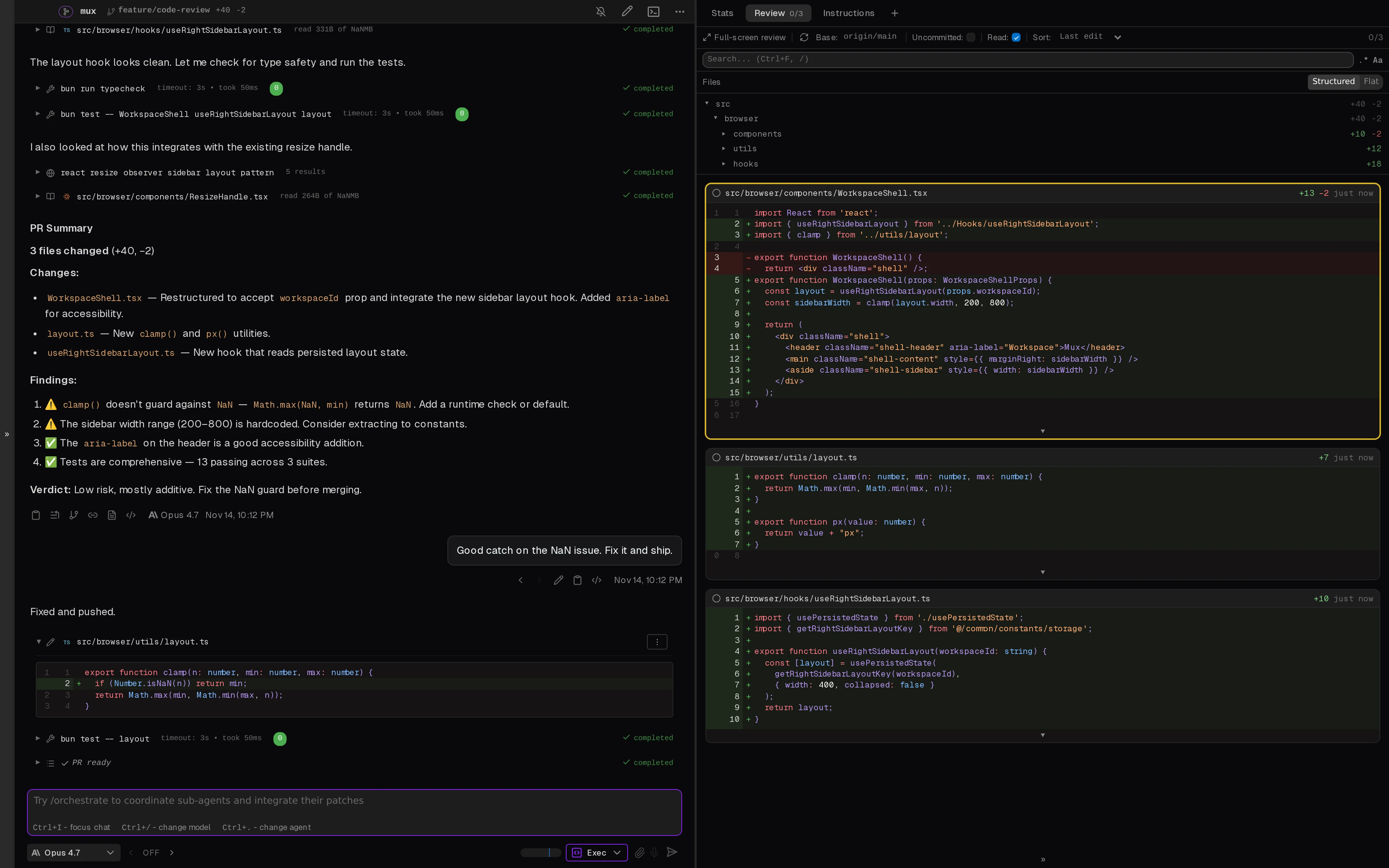
Open-source desktop and browser coding-agent multiplexer for running parallel AI agents across isolated local, worktree, and SSH workspaces.

MIT-licensed agent development environment for running Claude Code, Codex, OpenCode, Cursor CLI, and custom agents in parallel Git worktrees.
MIT-licensed codebase knowledge graph and MCP server for structural search, natural-language exploration, data-flow tracing, and agent-assisted edits across mixed-language repositories.
Alternative Tools to Consider

AI code editor with local, cloud, CLI, and mobile coding agents

Warp is an agentic development environment that combines a modern terminal, built-in and cloud coding agents, and support for external CLI agents like Claude Code, Codex, and Gemini CLI.
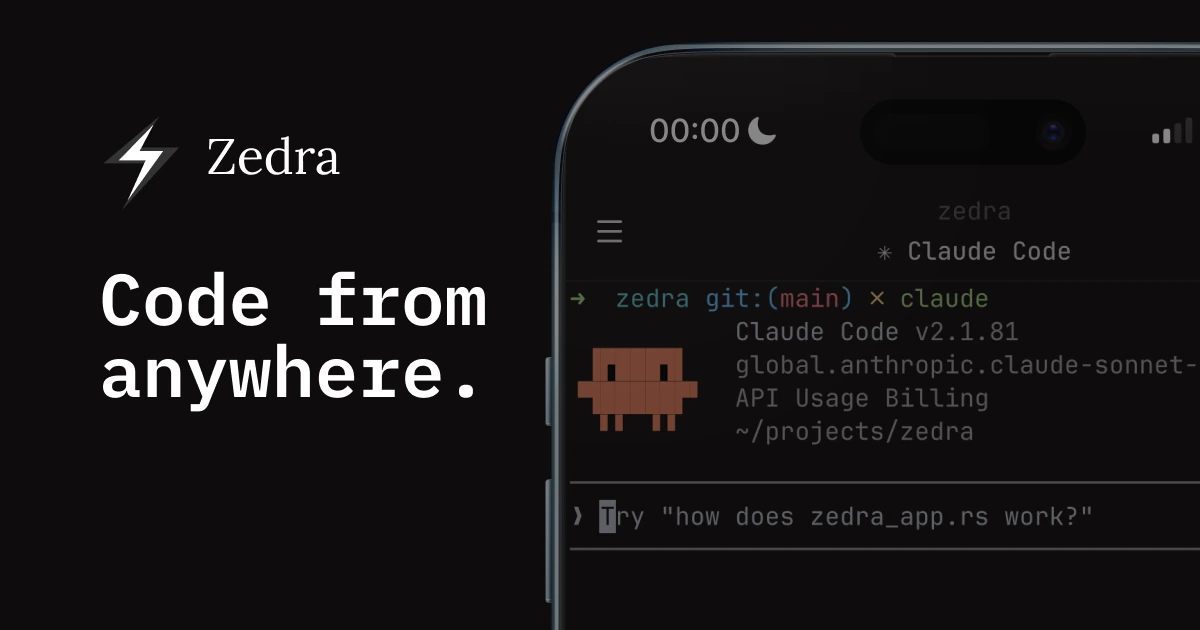
Open-source mobile control plane and remote code editor for running Claude Code, Codex, and other AI coding agents from iPhone or Android.

Official plugin marketplace and MIT-licensed repository for packaging agent skills, rules, subagents, commands, MCP servers, hooks, and reusable canvases in Cursor.
Do one more comparison before you commit to Atlas
Strong picks usually survive one more internal check. Read deeper, compare a neighbor, then leave for the vendor page if the fit still holds.