book-to-skill
Open-source agent skill and Python CLI that converts technical books and document collections into structured, on-demand skills for Claude Code, Copilot CLI, and Amp.
Do not bounce yet
Read the fit check, compare one alternative, then decide whether the vendor page is still your best next click.
Quick Verdict
Fast fit check before you leave the page
Make the fit call first. Vendor pages are good at selling, but they rarely tell you where the product is a bad match.
- Developers who repeatedly consult technical books or long-form documentation while using coding agents
- Claude Code, GitHub Copilot CLI, and Amp users building reusable Agent Skills
- Teams consolidating project documentation, papers, and internal reference material into navigable agent context
- Generated skills are compressed interpretations, not authoritative copies of the source; extraction or model analysis can omit, distort, or mis-segment important material.
- The skill workflow relies on the host coding agent to analyze content, so sensitive or copyrighted documents may be sent to the configured model provider depending on that host's setup.
- Optional extractors such as Docling, Poppler, Calibre, and format-specific Python packages add setup and platform variability.
Compare Next
Take one more internal step before the vendor pitch
This is where visitors usually jump out too early. Read one deeper take or open one alternative so the next click is informed instead of impulsive.
Alternative profile
Context7
Documentation context layer that feeds up-to-date, version-specific library docs and code snippets into Cursor, Claude, and other coding agents.
Alternative profile
Repomix
Open-source CLI and MCP tool that packs whole repositories into AI-friendly formats so coding agents can reason over real codebases with less setup friction.
Alternative profile
ai-memory
MIT-licensed local memory server and CLI for carrying coding context, summaries, and handoffs across Claude Code, Codex, Cursor, OpenCode, and other agent clients.
book-to-skill is an open-source Agent Skill and extraction CLI for developers who want technical books, documentation sets, or research collections to remain useful inside coding-agent workflows. It converts source documents into a compact core skill plus chapter files, glossary, patterns, and a cheat sheet. That structure is more durable than repeatedly dumping a whole PDF into context, but it also creates a derived interpretation that must be checked against the original source when accuracy matters.
book-to-skill turns PDFs, EPUBs, DOCX files, Markdown, HTML, and other documents into reusable Agent Skills with a compact SKILL.md, chapter files, glossary, patterns, and a cheat sheet. It is designed for developers who repeatedly consult technical books or project documentation while coding: the generated skill loads selected material on demand instead of placing an entire source into every conversation. The skill workflow supports Claude Code, GitHub Copilot CLI, and Amp, while a separate Python package exposes the extraction engine for scripts.
Why Choose book-to-skill?
Choose book-to-skill when you revisit the same technical material across many Claude Code, Copilot CLI, or Amp sessions and want chapter-level context on demand.
Its strongest distinction is the structured output: a core SKILL.md, chapter files, glossary, patterns, and cheat sheet rather than a single undifferentiated summary.
The format coverage and separate pip CLI make it useful for mixed collections of PDFs, EPUBs, office documents, web exports, and plain-text notes.
Do not treat generated skills as source-of-truth documentation. Review important claims against the original, confirm document rights, and understand which model provider receives content during generation.
Key Features
Converts a file, folder, glob, or list of documents into one structured Agent Skill with a core SKILL.md, per-chapter files, glossary, patterns, and cheat sheet.
Supports PDF, EPUB, DOCX, TXT, Markdown, reStructuredText, AsciiDoc, HTML, RTF, MOBI, AZW, and AZW3 through built-in parsers and documented optional extractors.
Installs generated skills into documented Claude Code, GitHub Copilot CLI, or Amp-compatible paths so relevant chapters can be loaded on demand during agent work.
Separates the full skill workflow from a pip-installable Python CLI that exposes the extraction engine for scripts and setup checks.
Handles multiple sources in one run, can fold new material into an existing skill, and skips a bad source while continuing an allowed batch.
Publishes tests, architecture notes, extraction benchmarks, a discovery-tax measurement tool, and a validator with host-specific lenses.
Pros & Cons
- Targets repeated reference use in coding-agent sessions rather than adding another generic chat or model gateway.
- The generated chapter structure can reduce recurring context load when developers return to the same technical material across sessions.
- Broad document-format support and separate skill and CLI installation paths cover both interactive agent use and scripted extraction.
- MIT licensing, active maintenance, packaged releases, tests, and published benchmark methodology make the project unusually inspectable for a young utility.
- Generated skills are compressed interpretations, not authoritative copies of the source; extraction or model analysis can omit, distort, or mis-segment important material.
- The skill workflow relies on the host coding agent to analyze content, so sensitive or copyrighted documents may be sent to the configured model provider depending on that host's setup.
- Optional extractors such as Docling, Poppler, Calibre, and format-specific Python packages add setup and platform variability.
- The project's token and cost claims are first-party measurements with scenario-specific assumptions; a one-off question may be simpler to answer from the original document.
Detailed Use Cases for book-to-skill
Convert a book into a compact core skill and chapter files that a supported coding agent can load selectively across repeated sessions.
Process folders, globs, or file lists so documentation, papers, and notes become one skill with source markers and shared indexes.
Fold a new edition or additional source into an existing skill instead of rebuilding a separate reference workflow.
Use the standalone Python CLI when the immediate need is batch-safe text extraction rather than registering the full agent skill.
Who Should Use book-to-skill?
Developers who repeatedly consult technical books or long-form documentation while using coding agents
Claude Code, GitHub Copilot CLI, and Amp users building reusable Agent Skills
Teams consolidating project documentation, papers, and internal reference material into navigable agent context
Tool evaluators comparing structured skills with PDF chat, repository packing, and hosted notebook products
Perfect For
Turn a technical book that a developer consults repeatedly into a reusable Claude Code, Copilot CLI, or Amp skill.
Combine project documentation, research papers, and notes into one navigable skill with source markers and chapter-level files.
Update an existing knowledge skill when a new edition, paper, or internal document becomes available.
Run the standalone extraction CLI in a script before applying a separate review or skill-generation workflow.
Technical Details
Direct Competitors
Context7
Repomix
NotebookLM
Claude Projects
DeepWiki
Similar Tools You Might Like

MIT-licensed local memory server and CLI for carrying coding context, summaries, and handoffs across Claude Code, Codex, Cursor, OpenCode, and other agent clients.
MIT-licensed codebase knowledge graph and MCP server for structural search, natural-language exploration, data-flow tracing, and agent-assisted edits across mixed-language repositories.
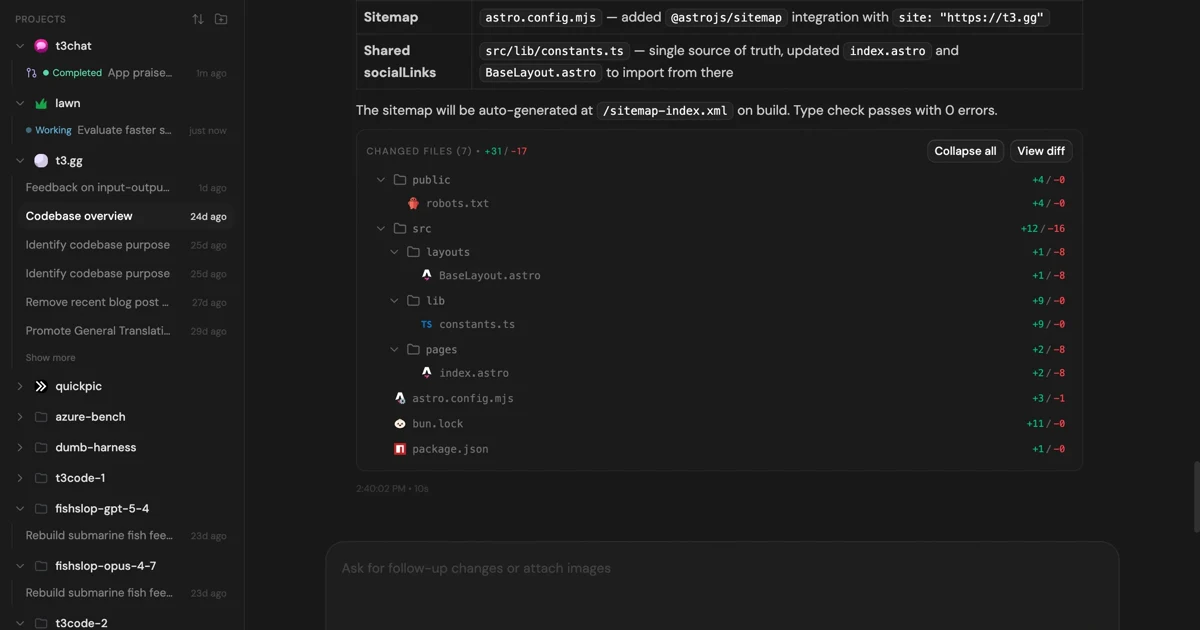
MIT-licensed control plane for running Claude Code, Codex, Cursor, Grok, and OpenCode threads from desktop, web, iOS, and Android clients.
Alternative Tools to Consider

Documentation context layer that feeds up-to-date, version-specific library docs and code snippets into Cursor, Claude, and other coding agents.

Open-source CLI and MCP tool that packs whole repositories into AI-friendly formats so coding agents can reason over real codebases with less setup friction.
Do one more comparison before you commit to book-to-skill
Strong picks usually survive one more internal check. Read deeper, compare a neighbor, then leave for the vendor page if the fit still holds.