
Context7
Documentation context layer that feeds up-to-date, version-specific library docs and code snippets into Cursor, Claude, and other coding agents.
Do not bounce yet
Read the fit check, compare one alternative, then decide whether the vendor page is still your best next click.
Quick Verdict
Fast fit check before you leave the page
Make the fit call first. Vendor pages are good at selling, but they rarely tell you where the product is a bad match.
- Developers using Cursor, Claude Code, OpenCode, or other MCP-capable coding agents
- Teams shipping against fast-moving frameworks and APIs where outdated examples are expensive
- Builders who want a lightweight docs retrieval layer without constructing their own RAG stack first
- The hosted ingestion and crawling stack is not fully open, so trust assumptions are different from a purely local tool
- It is most valuable for library- and framework-heavy work, not generic repo editing
- Active-user counts are not public, so adoption must be inferred from external signals
Compare Next
Take one more internal step before the vendor pitch
This is where visitors usually jump out too early. Read one deeper take or open one alternative so the next click is informed instead of impulsive.
Alternative profile
Apidog MCP Server
Official beta MCP connector that grounds AI coding assistants in Apidog projects, published API docs, or OpenAPI files.
Alternative profile
Mem0
Universal memory layer for AI agents that adds persistent context, retrieval, and personalization to coding workflows.
Alternative profile
OpenViking
Open-source context database for AI agents that organizes memory, resources, and skills through a file-system-style hierarchy.
Context7 is a documentation context layer for AI coding workflows. Instead of trusting whatever stale framework knowledge an LLM absorbed during training, it retrieves current library docs and code snippets, then feeds them into coding agents like Cursor, Claude Code, and other MCP-capable tools. If you are tired of agents confidently using dead APIs or old setup patterns, this is exactly the kind of infrastructure that earns its place in a serious vibe coding stack.
Context7 is one of the more defensible additions to an agent-coding directory because it fixes a real failure mode instead of pretending to replace your editor. It indexes current library documentation and code examples, then injects version-aware results into tools like Cursor, Claude Code, and other MCP-capable agents through either a CLI workflow or an MCP server. That makes it directly useful for vibe coding teams who are tired of hallucinated APIs, stale examples, and LLM answers frozen at old package versions.
Why Choose Context7?
Most coding-agent failures are not raw reasoning failures; they are context failures, and stale documentation is one of the dumbest recurring ones.
Context7 improves the tools developers already use instead of demanding a full workflow migration to some new editor or closed app builder.
The combination of official-site library coverage, strong GitHub traction, and real user chatter on HN and X makes it far more credible than typical MCP catalog filler.
It is especially useful when teams work across fast-moving libraries where version drift quietly breaks AI-generated code.
Key Features
Pulls up-to-date, version-specific library docs and code examples directly into coding-agent context
Supports both CLI + skill workflows and native MCP usage instead of forcing one integration path
One-command setup can target agents such as Cursor, Claude Code, and OpenCode
Large public library index with tens of thousands of documentation sources on the official site
Supports exact library IDs and version-aware retrieval to reduce stale or hallucinated answers
Pros & Cons
- Solves a real pain point in AI coding: outdated docs and invented APIs
- Fits into existing agent workflows instead of asking teams to adopt yet another editor
- Free path is meaningful enough to try before committing to it deeply
- Public traction across GitHub, HN, and X is much stronger than the average MCP-side project
- The hosted ingestion and crawling stack is not fully open, so trust assumptions are different from a purely local tool
- It is most valuable for library- and framework-heavy work, not generic repo editing
- Active-user counts are not public, so adoption must be inferred from external signals
- Coverage quality depends on how well each upstream documentation source is ingested and maintained
Detailed Use Cases for Context7
Ask your coding agent to use Context7 when implementing against a specific framework so the answer is grounded in current documentation instead of old training priors.
Context7 is especially helpful when building with ecosystems like Next.js, Supabase, React, or other libraries that evolve fast enough to make stale examples dangerous.
Install Context7 as an MCP capability so your preferred coding agent can query documentation directly instead of forcing you to copy-paste docs manually.
Use one shared docs-retrieval layer across agents and editors so the team is not depending on each person to remember which browser tabs are trustworthy.
Who Should Use Context7?
Developers using Cursor, Claude Code, OpenCode, or other MCP-capable coding agents
Teams shipping against fast-moving frameworks and APIs where outdated examples are expensive
Builders who want a lightweight docs retrieval layer without constructing their own RAG stack first
Practitioners comparing serious agent-coding infrastructure instead of another superficial chat wrapper
Perfect For
Feeding current framework docs into Claude Code, Cursor, or other coding agents during implementation
Reducing hallucinated API usage when working with fast-moving libraries like Next.js or Supabase
Standardizing docs retrieval across a team instead of relying on ad hoc tab switching
Installing a documentation-focused MCP capability without building a custom retrieval stack first
Technical Details
Direct Competitors
Serena
Apidog MCP Server
Mem0
OpenViking
Similar Tools You Might Like
Source-available model router that plugs into Claude Code, Codex, opencode, Cursor, and API clients to route each agent request to a cost-appropriate model.

Source-available MCP plugin that keeps heavy tool output out of Claude Code, Codex, Cursor, and other coding-agent context windows.

Open-source semantic retrieval and editing layer that upgrades Claude Code, Codex, Cursor, and other coding agents with IDE-like code intelligence.
Alternative Tools to Consider
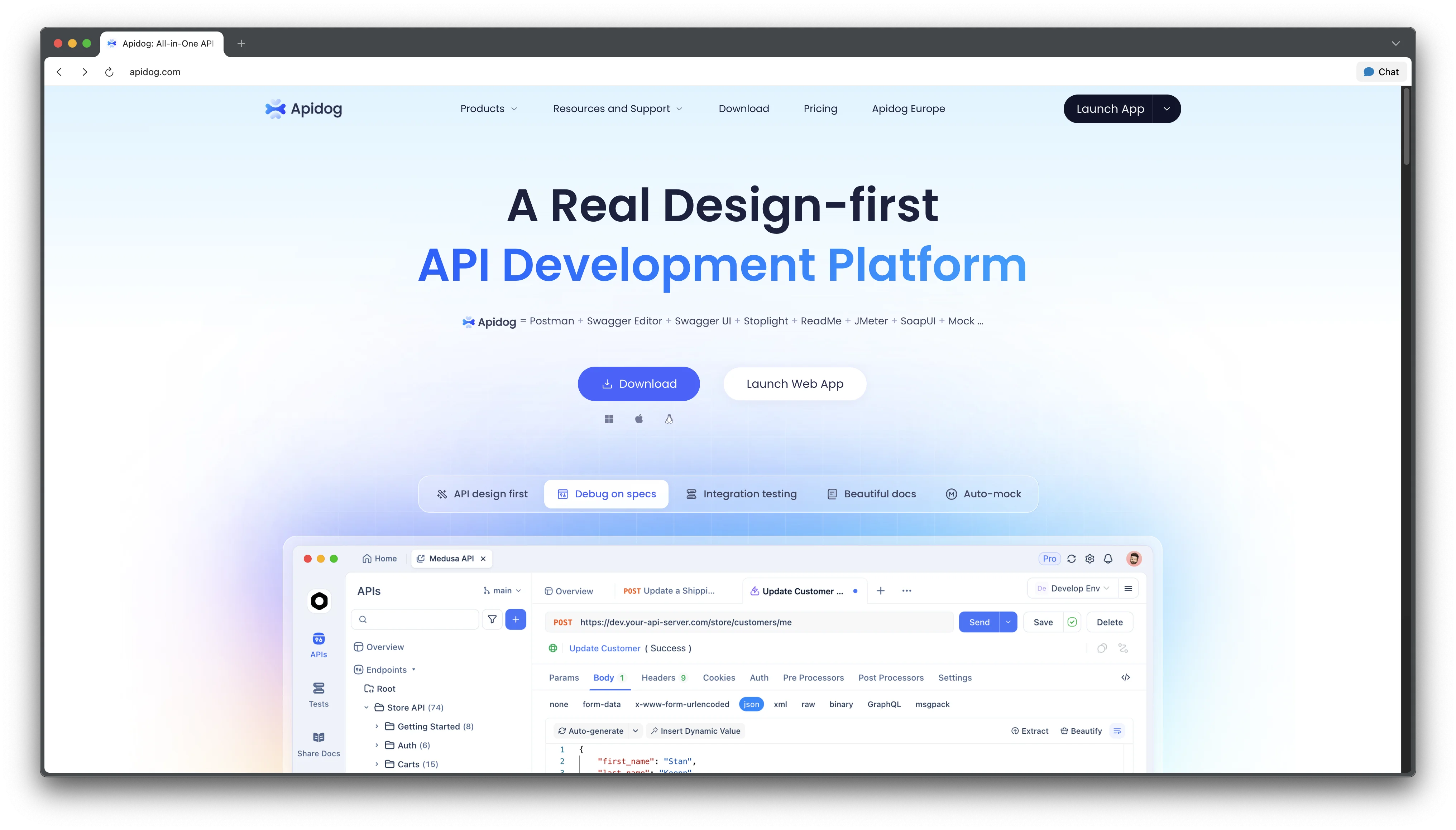
Official beta MCP connector that grounds AI coding assistants in Apidog projects, published API docs, or OpenAPI files.

Universal memory layer for AI agents that adds persistent context, retrieval, and personalization to coding workflows.

Open-source context database for AI agents that organizes memory, resources, and skills through a file-system-style hierarchy.

Minimal terminal coding harness with extensions, skills, tree-structured sessions, and serious multi-provider model support.
Open-source semantic retrieval and editing layer that upgrades Claude Code, Codex, Cursor, and other coding agents with IDE-like code intelligence.
Do one more comparison before you commit to Context7
Strong picks usually survive one more internal check. Read deeper, compare a neighbor, then leave for the vendor page if the fit still holds.