
Impeccable
Open-source design skill, CLI, and browser extension that gives coding agents design context, focused refinement commands, and deterministic frontend anti-pattern checks.
Do not bounce yet
Read the fit check, compare one alternative, then decide whether the vendor page is still your best next click.
Quick Verdict
Fast fit check before you leave the page
Make the fit call first. Vendor pages are good at selling, but they rarely tell you where the product is a bad match.
- Developers using AI coding agents to build frontend applications and landing pages
- Teams that need repeatable design context and visual quality checks across multiple agent harnesses
- Design engineers refining functional but generic agent-generated interfaces
- Impeccable improves design guidance and iteration but does not replace product judgment, accessibility review, user research, or hands-on cross-device testing.
- Integration depth can differ by harness because skills, commands, hooks, and extension workflows are not identical across every supported agent.
- Large GitHub numbers show public interest, not independently verified production adoption or measured design outcomes.
Compare Next
Take one more internal step before the vendor pitch
This is where visitors usually jump out too early. Read one deeper take or open one alternative so the next click is informed instead of impulsive.
Alternative profile
Onlook
Open-source visual code editor and early-access team workspace for designing directly in real React codebases with AI.
Alternative profile
Same
Browser-based AI app builder for generating, editing, and deploying full-stack Next.js web applications from prompts, URLs, or images.
Alternative profile
Stagewise
Open-source frontend coding agent and purpose-built browser that lets developers click live UI, inspect runtime context, and apply changes to real local codebases.
Impeccable is an open-source design layer for developers who already use coding agents but are tired of technically correct interfaces that still look generic. It supplies design context, focused refinement commands, deterministic anti-pattern detection, installation diagnostics, and browser-assisted iteration across popular agent harnesses. The useful distinction is that Impeccable does not claim to be another coding agent; it gives existing agents a more explicit design language and a repeatable quality workflow.
Impeccable is a design workflow for developers using coding agents to build frontend interfaces. It adds reusable design context, focused commands such as audit, critique, and polish, a deterministic detector for common UI anti-patterns, hooks and doctor checks, plus browser Live Mode for iterative visual work. It integrates with major agent harnesses instead of replacing them, making it useful when generated interfaces work technically but still look generic or inconsistent.
Why Choose Impeccable?
Choose Impeccable when your coding agent can implement frontend behavior but repeatedly falls back to generic layouts, weak hierarchy, and inconsistent visual decisions.
Its combination of design context and deterministic anti-pattern checks is more repeatable than relying only on subjective prompts or one-off screenshot critiques.
Documented support for Codex CLI, Claude Code, GitHub Copilot, Cursor, Gemini CLI, Grok Build, OpenCode, and Pi helps teams avoid locking the design workflow to one harness.
Treat the repository's strong traction as an evaluation signal rather than proof of production outcomes; test it against your actual design system, accessibility requirements, and device matrix.
Key Features
Installs design skills and reusable context files into supported coding-agent workflows so interface decisions are grounded in an explicit visual system rather than generic defaults.
Provides focused audit, critique, polish, normalize, and related refinement commands for improving existing frontend work without replacing the developer's coding agent.
Runs deterministic anti-pattern checks through the CLI to catch recurring interface problems that subjective model review can miss or apply inconsistently.
Supports Codex CLI, Claude Code, GitHub Copilot, Cursor, Gemini CLI, Grok Build, OpenCode, and Pi through documented integration paths.
Includes hooks and doctor diagnostics for keeping installations and project configuration healthy across agent environments.
Offers browser Live Mode through the Chrome extension for inspecting a running interface and iterating with visual context.
Pros & Cons
- Targets design quality inside existing agent workflows instead of introducing another general-purpose coding-agent wrapper.
- Combines model-readable design guidance with deterministic checks, reducing dependence on vague prompts such as 'make it look better.'
- Broad harness support makes the workflow portable across several popular coding agents.
- Apache-2.0 licensing, active releases, first-party documentation, and inspectable CLI and skill sources make the implementation easy to evaluate.
- Impeccable improves design guidance and iteration but does not replace product judgment, accessibility review, user research, or hands-on cross-device testing.
- Integration depth can differ by harness because skills, commands, hooks, and extension workflows are not identical across every supported agent.
- Large GitHub numbers show public interest, not independently verified production adoption or measured design outcomes.
- Teams with an established design system still need to adapt the supplied context and rules; generic defaults cannot encode their brand automatically.
Detailed Use Cases for Impeccable
Install reusable design guidance and project context so a coding agent works from declared visual principles instead of improvising generic UI defaults.
Run focused audits and deterministic checks to identify recurring hierarchy, spacing, typography, interaction, and composition problems before release.
Use targeted refinement commands after core functionality is complete, keeping the task narrower and more reviewable than a broad visual rewrite.
Use Live Mode to inspect the running interface and provide concrete visual context to a supported coding agent during the correction loop.
Who Should Use Impeccable?
Developers using AI coding agents to build frontend applications and landing pages
Teams that need repeatable design context and visual quality checks across multiple agent harnesses
Design engineers refining functional but generic agent-generated interfaces
Open-source evaluators comparing design skills, browser feedback tools, and AI-assisted UI workflows
Perfect For
Give a coding agent project-specific design vocabulary and constraints before it generates or refactors a frontend.
Audit an existing agent-built interface for generic patterns, weak hierarchy, inconsistent spacing, and other repeatable quality problems.
Run focused critique and polish passes after functionality works but before shipping a design-sensitive page.
Inspect a live browser implementation and feed precise visual context back into Codex, Claude Code, Cursor, or another supported harness.
Technical Details
Direct Competitors
Open Design
Onlook
Stagewise
v0
Same
Similar Tools You Might Like
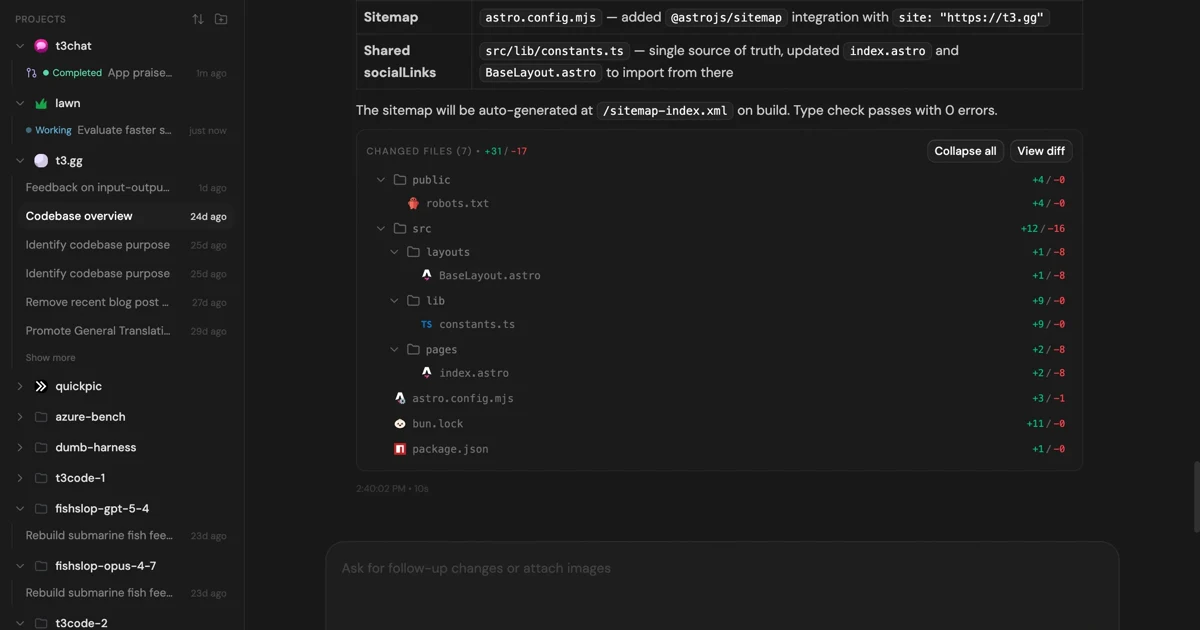
MIT-licensed control plane for running Claude Code, Codex, Cursor, Grok, and OpenCode threads from desktop, web, iOS, and Android clients.
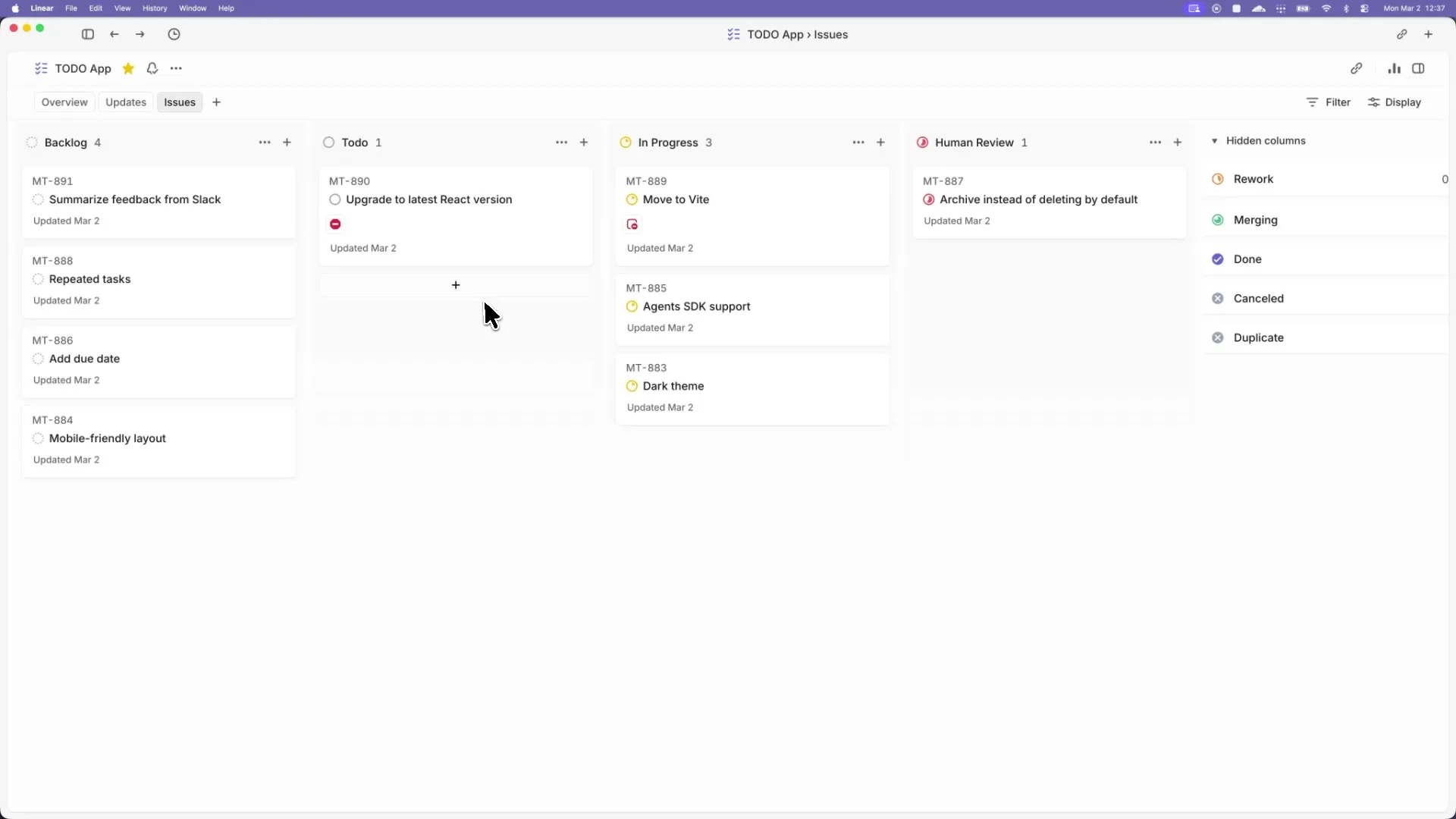
Apache-2.0 Codex orchestration spec and Elixir preview that turns tracker issues into isolated, long-running agent implementation runs.

Apache-2.0 local-first agent workspace with desktop, TUI, CLI, append-only execution logs, permission controls, recovery, and evaluation workflows.
Alternative Tools to Consider

Open-source visual code editor and early-access team workspace for designing directly in real React codebases with AI.

Browser-based AI app builder for generating, editing, and deploying full-stack Next.js web applications from prompts, URLs, or images.

Open-source frontend coding agent and purpose-built browser that lets developers click live UI, inspect runtime context, and apply changes to real local codebases.

Vercel's AI app builder for turning prompts into working web apps, UI, and product surfaces with GitHub sync and instant deployment.
Open-source, local-first design workspace that lets coding agents generate brand-aware prototypes, decks, dashboards, images, and design systems.
Do one more comparison before you commit to Impeccable
Strong picks usually survive one more internal check. Read deeper, compare a neighbor, then leave for the vendor page if the fit still holds.