
snip
Open-source CLI proxy that strips noisy shell output before it hits Claude Code, Cursor, Codex, and other coding agents.
Do not bounce yet
Read the fit check, compare one alternative, then decide whether the vendor page is still your best next click.
Quick Verdict
Fast fit check before you leave the page
Make the fit call first. Vendor pages are good at selling, but they rarely tell you where the product is a bad match.
- Developers already using Claude Code, Cursor, Codex, Gemini CLI, or similar shell-capable coding agents
- Teams trying to reduce token costs and context-window waste in long-running repo sessions
- Power users who want a configurable layer for shell-output compression rather than blindly accepting default agent behavior
- snip is an infrastructure layer, not a standalone coding agent, so its value depends on already using shell-heavy AI coding tools.
- The loudest token-savings numbers come from the project itself, so buyers should validate impact on their own repos instead of parroting the marketing.
- Setup still involves hooks, prompt injection, or agent-specific integration steps that some teams will find annoying compared with zero-config products.
Compare Next
Take one more internal step before the vendor pitch
This is where visitors usually jump out too early. Read one deeper take or open one alternative so the next click is informed instead of impulsive.
Alternative profile
context-mode
Source-available MCP plugin that keeps heavy tool output out of Claude Code, Codex, Cursor, and other coding-agent context windows.
Alternative profile
Context7
Documentation context layer that feeds up-to-date, version-specific library docs and code snippets into Cursor, Claude, and other coding agents.
Alternative profile
Repomix
Open-source CLI and MCP tool that packs whole repositories into AI-friendly formats so coding agents can reason over real codebases with less setup friction.
snip is one of those niche tools that looks minor until you have spent enough money watching a coding agent read garbage. It does not try to replace Claude Code, Cursor, or Codex. Instead, it sits in front of the shell, filters noisy command output, and feeds the model shorter, more useful summaries so your context window is not burning on `go test`, `git log`, or `kubectl` sludge.
snip is not another pretend-autonomous coding agent. It is a narrow but useful infrastructure layer that sits between your agent and the shell, rewrites verbose command output into compact summaries, and gives expensive context windows less garbage to chew on. The product pitch is simple and credible: declarative YAML filters, built-in support for a wide range of developer commands, hooks for tools like Claude Code and Cursor, and a local tracking dashboard so you can see whether the token-savings story is real on your own workflow instead of trusting vibes alone.
Why Choose snip?
snip solves a concrete workflow problem instead of pretending another editor shell or chat wrapper is innovation.
Its value compounds when you use coding agents heavily, because shell-output waste is one of the dumbest recurring sources of token burn.
The product is open source, local-first, and transparent enough to evaluate without giving a black-box startup more trust than it has earned.
Declarative filters make it easier to extend than projects that require writing and shipping compiled strategies for every new command pattern.
Key Features
Intercepts shell output before it reaches an LLM client, then compresses noisy command results into shorter summaries using declarative YAML filters.
Ships with 126 built-in filters spanning common developer tooling such as git, GitHub CLI, Go, cargo, npm, pnpm, docker, kubectl, terraform, and more.
Supports multiple coding-agent environments including Claude Code, Cursor, Copilot, Gemini CLI, Codex, Kilo Code, OpenCode, OpenClaw, Aider, and other shell-capable workflows.
Includes a local gain dashboard and SQLite-backed tracking so users can measure token savings instead of blindly trusting vendor claims.
Custom filter authoring is data-driven rather than compiled, which makes project-specific output reduction much easier than patching a binary or forking a codebase.
Pros & Cons
- Targets a real and expensive failure mode in agentic coding: context-window waste from raw shell output that the model does not actually need.
- Fits under tools developers already use instead of demanding a full migration to a new editor or hosted coding platform.
- Open-source MIT licensing and local execution are materially more trustworthy than opaque token-optimization wrappers.
- The YAML filter model is a genuinely useful design choice because teams can adapt output handling without recompiling the tool.
- snip is an infrastructure layer, not a standalone coding agent, so its value depends on already using shell-heavy AI coding tools.
- The loudest token-savings numbers come from the project itself, so buyers should validate impact on their own repos instead of parroting the marketing.
- Setup still involves hooks, prompt injection, or agent-specific integration steps that some teams will find annoying compared with zero-config products.
- If your workflow rarely runs verbose shell commands, the payoff may be too small to justify another moving part.
Detailed Use Cases for snip
Use snip when your coding assistant keeps wasting context on repetitive test output, git metadata, or infra command noise that could have been summarized in a few lines.
Write custom YAML filters when your team has house commands or noisy internal scripts that agents repeatedly mis-handle because the raw output is too verbose.
Deploy one compression layer across multiple coding assistants instead of solving the same shell-noise problem separately in Claude Code, Cursor, Codex, and Gemini CLI.
Use the gain dashboard and tracking data to see which commands actually bloat your sessions, then decide whether more filtering is worth the operational overhead.
Who Should Use snip?
Developers already using Claude Code, Cursor, Codex, Gemini CLI, or similar shell-capable coding agents
Teams trying to reduce token costs and context-window waste in long-running repo sessions
Power users who want a configurable layer for shell-output compression rather than blindly accepting default agent behavior
Builders comparing snip with context-efficiency tools like context-mode, Serena, and Repomix
Perfect For
Reducing token burn in Claude Code, Cursor, Codex, Gemini CLI, or similar agent sessions that constantly run test, git, build, and infra commands.
Compressing verbose shell output into agent-friendly summaries while preserving the core signal needed for debugging or task continuation.
Creating project-specific filters for repetitive commands so coding agents stop wasting context on known-noise outputs.
Measuring which commands are bloating your AI workflow through local gain reports instead of guessing where the token budget is disappearing.
Technical Details
Direct Competitors
context-mode
Repomix
Serena
Context7
Similar Tools You Might Like

MIT-licensed local memory server and CLI for carrying coding context, summaries, and handoffs across Claude Code, Codex, Cursor, OpenCode, and other agent clients.
MIT-licensed codebase knowledge graph and MCP server for structural search, natural-language exploration, data-flow tracing, and agent-assisted edits across mixed-language repositories.
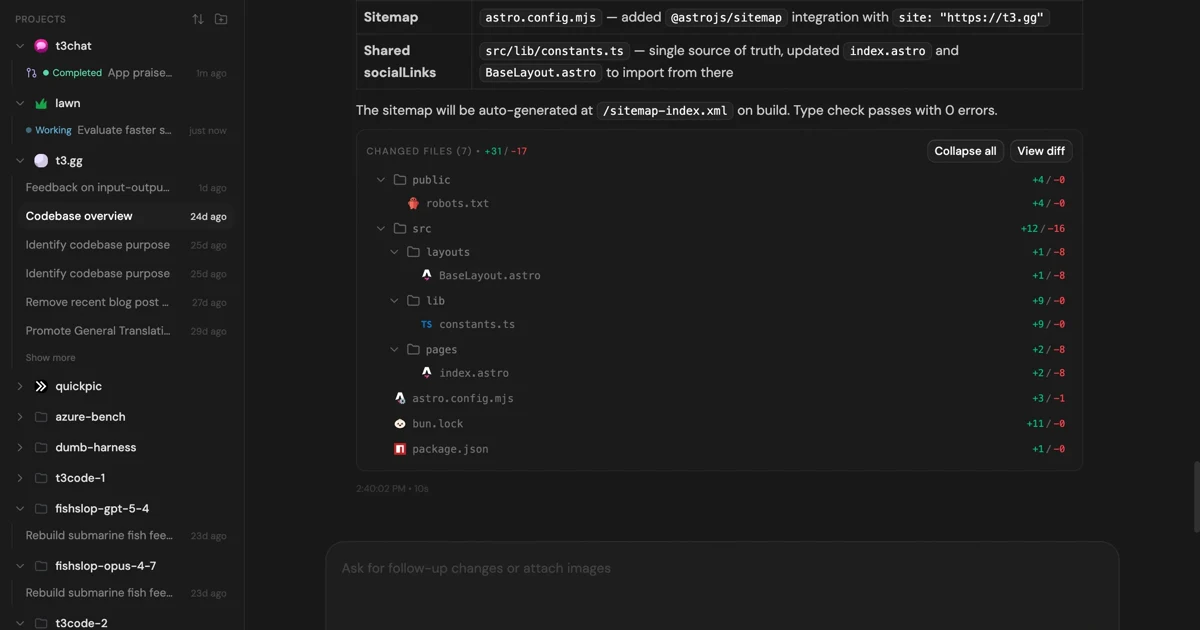
MIT-licensed control plane for running Claude Code, Codex, Cursor, Grok, and OpenCode threads from desktop, web, iOS, and Android clients.
Alternative Tools to Consider

Source-available MCP plugin that keeps heavy tool output out of Claude Code, Codex, Cursor, and other coding-agent context windows.

Documentation context layer that feeds up-to-date, version-specific library docs and code snippets into Cursor, Claude, and other coding agents.

Open-source CLI and MCP tool that packs whole repositories into AI-friendly formats so coding agents can reason over real codebases with less setup friction.

Open-source semantic retrieval and editing layer that upgrades Claude Code, Codex, Cursor, and other coding agents with IDE-like code intelligence.
Do one more comparison before you commit to snip
Strong picks usually survive one more internal check. Read deeper, compare a neighbor, then leave for the vendor page if the fit still holds.